Vanadium Oxychloride: An Industry Essential with a Complicated Edge
Historical Development
Long before electronics, batteries, or even modern chemistry labs became the norm, vanadium captured the curiosity of chemists in the 19th century. Vanadium oxychloride came onto the scene as researchers started seeking better ways to extract, refine, and utilize vanadium itself, which appeared mostly locked inside minerals. As gas-phase chemistry took off, pioneers like Roscoe developed new extraction pathways that used chlorine and oxygen to transform metal ores into volatile compounds. This specific oxychloride, with its unique reactivity and manageable boiling point, attracted attention for both its purity and potential in dissolving and carrying vanadium into new chemical frontiers. Its story started in small flasks and high-temperature tubes, but quickly moved into industry, where people learned to refine the preparation and work with the resulting product on a larger scale.
Product Overview
Vanadium oxychloride—usually showing up as a yellowish liquid—stays central in laboratories and specialized production facilities. Almost everything about it points to a tailored industrial role. In most cases, buyers and researchers seek this compound for its usefulness as a vanadium source or for chemical synthesis. Its ability to act as both an oxidant and a chlorinating agent makes it more than just another specialty chemical. Unlike basic salts or oxides, vanadium oxychloride sits at the intersection of reactivity, volatility, and selective application. Its production and sale usually focus on purity, water content, and reliable packaging, which directly impact how well it performs in downstream uses.
Physical & Chemical Properties
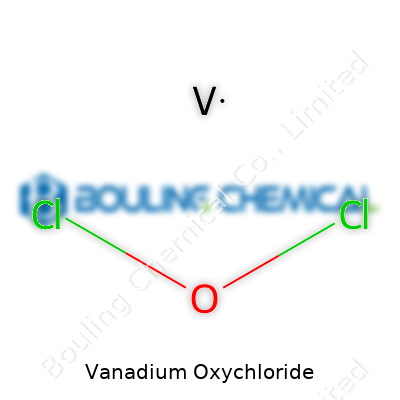
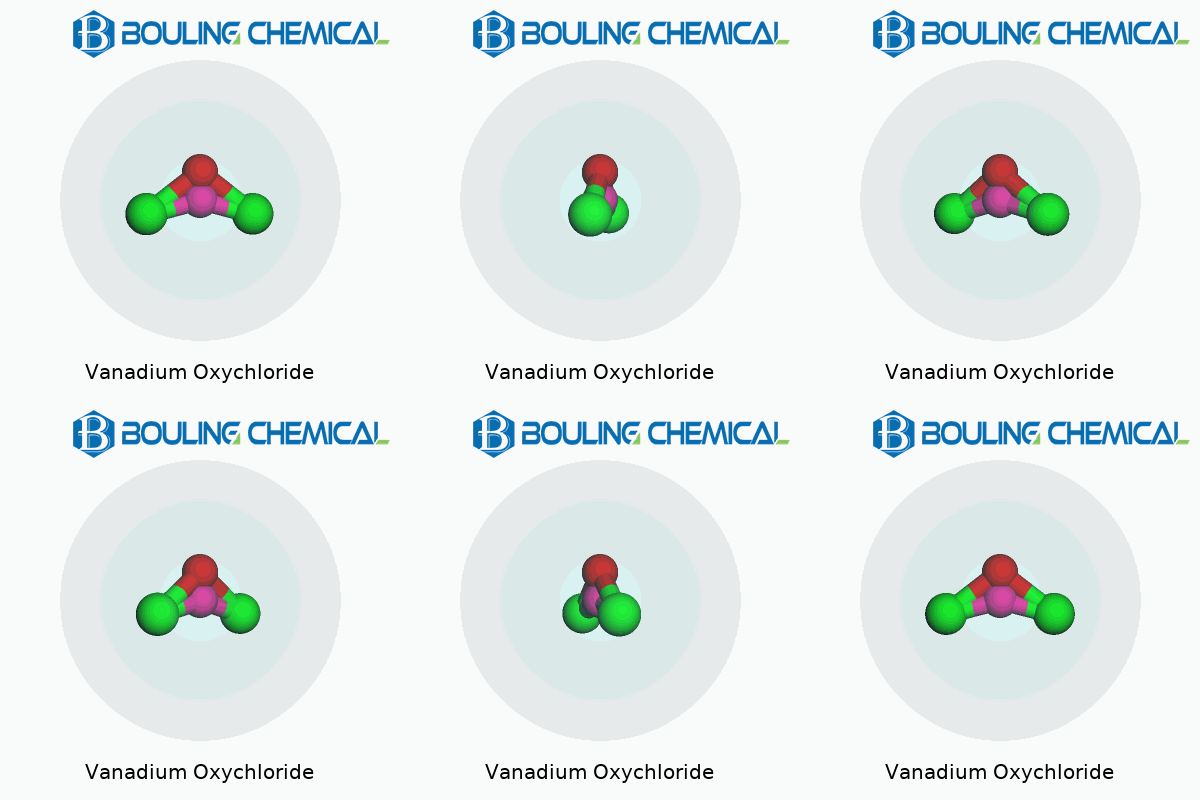
This liquid delivers a sharp, pungent odor. It boils around 127°C and freezes near -26°C, flowing quite easily under room temperature conditions. Its yellow hue gives it away in the lab, and it reacts strongly with water, releasing acidic fumes and forming vanadium oxyhydroxide. As a moisture-sensitive liquid, it resists long-term storage outside airtight containers. Vanadium oxychloride stands out for its reactivity with organic and inorganic substrates. Its molecular formula, VOCl3, tells part of the story, but the real drama unfolds in reactions that swap chloride or oxygen with other elements. In a chemical context, it switches roles rapidly—shifting from oxidizer in one process to chlorinator in another.
Technical Specifications & Labeling
Most suppliers describe vanadium oxychloride by its purity (typically 98% or higher), density (about 1.91 g/cm3), boiling point, and trace impurities, especially regarding chloride and water content. Labeling must follow strict rules in every country where it goes: UN Hazard Class 8 (corrosive, for transport), a flame symbol for volatility, and hazard statements relating to its severe eye, skin, and lung damage risks. Labels show supplier details, lot number, and handling instructions. On-site, most facilities double up safety notices and include storage requirements to keep this liquid contained, cool, and away from water or flame sources. The need for very specific, clear technical sheets comes from both compliance and the demands of critical research.
Preparation Method
Producers of vanadium oxychloride usually rely on one of two main routes. In the first, vanadium pentoxide reacts directly with thionyl chloride or phosphorus pentachloride at high temperatures, pushing the formation of volatile oxychloride. The second method uses direct chlorination of vanadium oxide in the presence of carbon, heating the raw materials in a flow of dry chlorine. Both approaches demand careful temperature control and gas handling since side products—like chlorine gas or hydrochloric acid—pose hazards to both workers and the environment. The technical know-how required for consistent yield discourages most small-scale production outside well-equipped facilities. High-purity product calls for multiple purification steps, such as fractional distillation under inert gas.
Chemical Reactions & Modifications
Vanadium oxychloride goes to work in both academic and industrial chemistry. As a starting point, it often serves as the foundation for making vanadium-based catalysts, especially those used in the production of olefins and polymer resins through Ziegler–Natta polymerization. In these reactions, VOCl3 controls electron flow and helps create the right environment for transforming simple molecules into valuable chemicals. Beyond catalysis, this liquid participates directly in ligand-exchange reactions and in the synthesis of more complex vanadium compounds, including some battery materials. Its reactivity with water makes it a handy source for forming vanadium oxides under controlled conditions, or for inserting vanadium into organic compounds using organometallic techniques.
Synonyms & Product Names
Scientists and suppliers deal with a series of names for this compound. Common ones include vanadium oxytrichloride, vanadyl chloride, or simply VOCl3. Trade catalogues sometimes list it under slightly different formats based on region or regulatory system, but all refer to the same product, with CAS number 7719-03-7 providing universal clarity in data sheets and import documents.
Safety & Operational Standards
Using vanadium oxychloride in any setting means facing significant risk if handled without respect. Even small splashes burn, and the vapors easily damage mucous membranes and eyeballs. Only well-trained teams equipped with full chemical goggles, gloves, and fume hoods attempt to transfer or weigh this compound. Facilities keep emergency eyewash stations and spill kits close. Storage practices mirror those for highly aggressive acids: tightly sealed glass or PTFE containers, far from water sources, cool ambient temperatures, with clear hazard signs posted on every shelf. Staff review safety procedures regularly, and incidents or exposure receive immediate medical review, as inhaling or ingesting even small amounts could set off acute respiratory or biochemical damage.
Application Area
Industrial chemists rely on vanadium oxychloride to build complex organic molecules, tailor catalyst systems, and set up tricky reactions that need a strong chlorinating environment. It's indispensable in petrochemical fields, especially for making certain plastics and synthetic rubbers, and in lithium-vanadium phosphate battery research, where precision vanadium chemistry matters. Labs exploring materials science adopt vanadium oxychloride to create thin films and specialty coatings with unique optical or electronic features.
Research & Development
Development teams at chemical manufacturers and university labs keep investigating new ways to put vanadium oxychloride to use. The push toward safer, greener synthesis methods calls for tweaks in reaction conditions, including the use of better gas scrubbing, more selective reactivity, or replacing traditional solvents. Device engineers test new applications in advanced batteries, looking for stable, high-performance electrodes when using lithium-vanadium combinations. Polymer scientists turn to vanadium oxychloride for innovations in catalyst technologies designed to cut cost, boost conversion rates, and limit environmental fallout.
Toxicity Research
Decades of toxicity testing have shown how dangerous vanadium oxychloride can be. With exposure, the lungs take the most immediate hit, often showing acute irritation, chemical pneumonitis, or longer-term breathing trouble. Animal studies point to systemic toxicity, including potential kidney and liver damage with repeated exposure. Most labs observe that even low vapor concentrations can harm both skin and underlying tissue. Regulatory authorities like OSHA and the EU’s REACH framework set strict limits on permissible exposure—usually in the low parts-per-million or milligram-per-cubic-meter range. Medical researchers keep studying exact biochemical effects, as there is evidence that vanadium compounds, including vanadium oxychloride, could disrupt metabolic enzyme systems over long exposure.
Future Prospects
Growth in both battery technology and catalyst engineering keeps vanadium oxychloride firmly in the running for increased use over the coming decade. Its established track record as both reagent and precursor means it will remain part of many industrial toolkits, but the quest for safer, more environmentally sensible alternatives shapes ongoing research. Promising directions involve modifying the molecule for more selective reactivity, improving containment systems, or shifting to lower-toxicity analogues for large-scale operations. Tighter global safety standards and spill control technology will keep fast-tracking whenever incidents occur or as new data emerges about long-term hazards. Professional experience shows that materials with such sharp benefits and risks always spark creative efforts to get all the value with as little downside as possible. That forward motion comes from both bigger R&D budgets and the constant drum of environmental regulation pushing change, giving vanadium oxychloride a tense but intriguing role in chemical development.
Understanding Vanadium Oxychloride
Vanadium oxychloride often gets overlooked, yet this compound shows up in places you’d never expect. Most folks don’t realize how much their daily lives touch chemistry. Take this chemical—yellowish, sometimes a bit scary looking, but packed with purpose. In a world powered by smart materials and efficient machines, products like this help things tick along.
How Vanadium Oxychloride Drives Chemical Reactions
Chemists lean on vanadium oxychloride for its strong power as a catalyst. It speeds up chemical reactions in factories making everyday goods. In my years working in chemical manufacturing, I’ve seen plants use vanadium oxychloride in the production of organic acids. It helps splice together molecules for things like plastics and rubbers that you find wrapped around wires or tucked into car parts. Its usefulness as a reagent can’t be overstated in these steps.
Vanadium oxychloride features heavily in the large-scale manufacture of intermediates. These are the in-between molecules on the way to a finished product. So, even if you never see the chemical in your kitchen or garage, something you use probably passed through a process that relied on this compound for that jump from basic ingredient to finished item.
Role in Creating Pharmaceuticals
Medicine relies on chemical building blocks that need to be pure and precise. This compound’s strong ability to promote targeted reactions makes it valuable in pharmaceutics. In a drug lab, precision keeps people safe. Making one wrong move or using the wrong ingredient can ruin an entire batch of medication. Vanadium oxychloride’s specific reactivity trims out extra steps, keeps things on track, and can make some medications more affordable or available.
Environmental and Health Concerns
As with plenty of industrial chemicals, this one brings safety demands. Years ago, while visiting a factory, I remember seeing strict handling protocols: protective gear everywhere, chemical detectors on the walls, scrubbers running high. Workers follow this for good reason. Vanadium oxychloride in liquid or vapor can cause burns or breathing problems. If released into water or air, it threatens wildlife. Regulators in countries like the US and EU don’t let manufacturers cut corners. Every bit gets tracked and disposed of according to strict environmental standards.
Innovations and Safer Alternatives
Today, companies explore safer ways to use chemicals like vanadium oxychloride. Green chemistry aims for less hazardous substances and better recycling. Some research groups study catalysts that break down more easily or don’t pollute. In my experience, even small tweaks in a process—switching equipment, using closed systems—can cut risks. When businesses invest in cleaner technology, the whole community breathes easier.
Why Vanadium Oxychloride Matters
It’s easy to forget how many hands, brains, and experiments go into the materials around us. Vanadium oxychloride matters because it shapes the backbone of thousands of processes that make life work. From building medical supplies to holding together vital infrastructure, its legacy shows up all over our modern world. With innovation, we stay safer and keep progress moving forward without sacrificing health or the planet.
Understanding the Hazards
Vanadium oxychloride isn’t just another chemical bottle on the shelf. It gives off sharp, irritating fumes that get right into your lungs. Get a whiff while moving a bottle and you feel it in your chest and throat first. Eyes begin to burn. Hands get itchy. As a chemist with a decade in research labs, I’ve seen new technicians rush in without much thought. Usually, they come out coughing. This stuff quickly teaches everyone in the room to respect it.
Personal Protective Equipment Saves Health
Reach for the right gear before even opening the container. Standard gloves from the grocery store won’t cut it. Go for thicker, chemical-resistant gloves. Nitrile has saved my skin more than once, especially when those glass ampoules leave residue on your fingertips. Wear a full lab coat—splash protection isn’t optional. Safety goggles keep stinging vapors out of your eyes. For bigger transfers, a face shield steps up the protection.
Ventilation Makes a Difference
One hood I worked near once had a clogged exhaust. Even though the sash was down, vapors leaked. My team found out right away—anyone nearby started wheezing. Always check that the fume hood works. Pull air with a strong draft. It never hurts to add a secondary exhaust if you’re transferring larger batches or creating a solution that might hiss up more vapor. Fume hoods eat up a budget, but breathing is more important.
Preparation Before Handling
Every bottle of vanadium oxychloride comes sealed for a good reason. Pick your tools ahead of time. Double-check the glassware for chips; this stuff reacts fast with water and pretty much anything moist. Even a little bit of sweat can set off fumes. Have spill kits and neutralizing agents within arm’s reach—soda ash works in a pinch, but specific commercial kits do a cleaner job in my experience.
Emergency Planning
Accidents hit every laboratory, whether you’re a rookie or a veteran. I’ve seen bottles tumble and glassware crack. Local eye-wash stations and emergency showers save people from lasting harm, but only if everyone can reach them fast. Create a clear, practiced route from your workstation. Post emergency numbers on every bench. Have fresh air access right outside the workspace because moving a victim into the hallway just isn’t fast enough.
Storage and Waste Matters
Vanadium oxychloride attacks regular plastic and leaks through weak lids. Glass or Teflon containers with secure seals last longer. Store it far away from humid areas—even the slightest water exposure kicks off a reaction. Keep fire extinguishers that handle chemical reactions nearby. Waste stays dangerous long after the experiment ends. Label every waste container right away, and arrange pickups before containers pile up.
Training and Respect Overrules Confidence
I trust my instincts more than any manual. Each new handler deserves supervised practice. Talk openly about close calls and mistakes with colleagues—people learn more from stories than rulebooks. No one handling vanadium oxychloride gets to skip real safety education, not even experienced chemists. The chemical punishes shortcuts.
Understanding Vanadium Oxychloride
Vanadium compounds rarely make headlines, but vanadium oxychloride steps up when industries require a reliable chemical with punchy reactivity. Its formula – VOCl3 – says plenty with a handful of elements. There’s vanadium, oxygen, and three chlorines per molecule. This isn’t just trivia for a high school quiz. Manufacturing, research, and even battery tech look toward vanadium compounds when the process needs strength, corrosion resistance, or a precise catalytic function.
Why VOCl3 Matters in Industry
I once visited a plant where workers depended on vanadium oxychloride in producing organic chemicals. The air carried a sharp tang when the bottles unscrewed. Day after day, folks there watched the color and temperature to gauge reactions. VOCl3, a yellowish liquid, holds a special place in their toolkit because it pushes reactions that wouldn’t budge otherwise. In making polymers, for instance, it brings the catalyst that gives us durable materials from humble monomers.
Chemical Behavior and Handling
Anyone dealing with VOCl3 will say it demands respect. The formula gives the first clue. Three chlorines make this compound reactive, especially if it meets water. It fumes, releasing hydrogen chloride gas that burns the nose and eyes. My mentor always said, “Treat every drop like it’s hungry for a reaction,” and he was right. That kind of behavior requires airtight storage and people who understand what personal protection actually means. This isn’t something to work with in shorts and T-shirt.
Current Uses and Concerns
Vanadium oxychloride acts as a tool for chemists everywhere. It works as a chlorinating and oxidizing agent. During the syntheses of drugs and specialty polymers, VOCl3 finds a role no other chemical quite fills. On another front, as countries move toward renewable energy, vanadium-based batteries attract more interest. VOCl3 provides some building blocks for these storage solutions, hinting at a bigger leap for grid stability. It’s hard to overstate how essential this molecule becomes once supply chains for green technology expand.
Health, Safety, and Environmental Impact
The chemical itself isn’t something anyone should spill lightly. Exposure carries risks – inhalation brings trouble to the lungs, and skin contact leads to burns. Proper fume hoods and gloves serve as the frontline. Disposal can’t mean dumping down a drain. Chlorine-based fumes have no business in waterways, and metal contamination from vanadium raises flags for environmental health. Policymakers and factory managers have started pushing for closed systems that recycle what’s possible and treat the rest. That’s better for workers, surrounding communities, and the planet.
Building a Better Future
Working with chemicals like VOCl3 shows how a simple formula carries weight in science and industry. Early education, updated safety protocols, and a culture that values health make the difference. Investment in new, less hazardous processes would help phase out some of the risks while letting innovation carry on. Sharing best practices across labs and factories ensures fewer accidents and a stronger workforce. The best way forward shapes itself around respect for both the compound and the communities tied to its production.
The Real Dangers of Vanadium Oxychloride
Vanadium oxychloride does not play around. It reacts fiercely with water, gives off toxic fumes, and does a number on human skin or eyes. I’ve seen what mismanaging chemicals like this can do. It doesn’t just put storage at risk — it puts people on the front lines in harm’s way. Safety demands respect for strong acids like this. Beyond strict rulebooks and data sheets, real experience makes clear: rushing things or cutting corners lands folks in the ER.
Hydrolysis happens rapidly here, so even a trace of moisture brings trouble fast. Hydrogen chloride gas follows, burning any tissue it reaches. Inhaling a whiff can leave permanent lung scars. Labs and warehouses with poorly sealed containers struggle with lingering odors and chronic headaches, if not evacuations. So storing this stuff means keeping the air dry, the space locked down, and the attitude—serious.
Accessible, Lockdown Storage Methods That Actually Work
Glass is nothing but a liability in this case. Vanadium oxychloride chews right through it over time. Go with tightly sealed containers, made from materials like PTFE or specialized plastics built for aggressive chemicals. Leave metal and regular polymer bottles for friendlier substances. Shelves in cool, dry, well-ventilated rooms protect from wild temperature swings and stray humidity.
Forget about cramming these bottles on a high shelf in the break room closet. Chemical storage rooms exist for a reason. Dedicated, ventilation-equipped cabinets lower the odds of accidental exposure. Spill trays under containers catch drips or leaks before they become a crisis.
Storing it way from other chemicals counts for even more. Don’t let it share a shelf with water, alcohols, or bases. More than one accident started with a careless worker wiping up a spill with a damp cloth just inches from another open bottle. Fumes and spontaneous combustion sound dramatic, but they’re just what happens when these substances mingle.
Labeling and Access Control—Why Cutting Corners Isn’t Worth It
Clear, bold labeling needs to stand front and center. A tired label printer and a scrap of tape won’t cut it; use chemical-resistant tags and check them monthly. In an emergency, you do not want confusion. Mixed up jugs and missing hazard stickers breed mistakes. In my early days at a research plant, I saw a technician skimp on this and pour a small amount into a reaction flask, thinking it was a different chloride. The hiss and heat that followed nearly sent us sprinting for the eyewash stations.
Access control is more than a policy—it’s a culture. Restrict entry to properly trained staff who know the properties of vanadium oxychloride, who use goggles, gloves, long sleeves, and respirators at all times. Lock storage areas and maintain a strict check-out system. Every mistake in chemical handling, in my experience, starts with a rushed job, shortcuts, or unclear roles.
Proactive Inspection and Community Preparedness
Too often, storage checks become a box-ticking exercise. Inspect containers for leaks and signs of degradation every week. Keep spill kits and neutralizing agents nearby. Practice emergency procedures as if someone’s family depends on it—because, at the end of the day, they do. In places I’ve worked, bringing in local emergency services for a walk-through made everyone take protocols more seriously and surfaced gaps nobody spotted on paper.
With history full of preventable disasters caused by chemical mismanagement, vanadium oxychloride storage forces us to stay sharp. Lives, the workplace, and the environment each benefit when real attention and hands-on vigilance get treated as non-negotiables.
Chemical Exposure and Health Risks
Vanadium Oxychloride isn’t a chemical people run into every day. Workers in metallurgy, chemical synthesis, or industrial labs may face it head-on. This substance has a sharp odor and forms yellow vapor that can get in the air quickly. It burns eyes, skin, and the throat in moments. Breathing dust or fumes makes lungs feel like they’re on fire, and short exposure can lead straight to coughing, wheezing, and chest pain. I’ve seen what chemical burns look like on site, and trust me, not knowing what’s in the air sometimes leads to regrettable lapses in safety.
Immediate Hazards and Long-term Damage
People often don’t realize how fast inhaling a toxic vapor can ruin a day, or a career. Vanadium Oxychloride is aggressive. The throat and lungs react badly almost right away. People accidentally splashed can end up with deep tissue burns—painful, slow to heal. Extended exposure messes with the kidneys, irritates the respiratory system, and can hit the digestive tract too. There’s evidence showing vanadium compounds increase cancer risk. Lab animal studies and some workplace reports link ongoing exposure to higher rates of lung cancer and organ damage. I remember reading about a chemical operator nearly collapsing after a spill—the safety suit he wore kept him out of the hospital, but not everyone gets that lucky.
Environmental Impact
This isn’t just about worker health. Vanadium Oxychloride reacts fast with water and air, creating hydrochloric acid. If a drum leaks near a drain, it doesn’t just stop on the plant floor—it eats through concrete, causes heavy metal runoff, and poisons downstream environments. The acid mist can linger, making it dangerous for people not even working with the material. In factories where ventilation hasn’t kept up with modern standards, leaks become neighborhood problems. Children, people with asthma, and elderly neighbors end up with nosebleeds and sore throats because fumes managed to drift out, unnoticed until symptoms stack up.
Workplace Safety and Best Practices
Everyone talks about PPE for a reason. Thick gloves, chemical goggles, and tight respirators aren’t overkill. I’ve watched teams that wore dust masks shift to full-face gear after a close call—the difference in morale was huge. Proper storage in airtight containers, careful transfer, and routine inspections catch leaky valves or cracks in transfer lines before disaster hits. Training plays a big part too. New hires who understand what vanadium oxychloride does reach for the chemical suit without hesitation. Factories that keep up emergency showers and eyewash stations near every handling spot save dollars—and people—from lasting injuries.
Regulatory Oversight and Solutions
Government standards set clear exposure limits for vanadium compounds. OSHA, NIOSH, and European agencies have all pushed for tougher controls because of the evidence pointing to severe risks. The real challenge comes with maintenance and compliance. It doesn’t help to put rules on paper if forgotten valves and overworked staff get ignored. Companies need to invest in continuous monitoring technology—real-time detectors, regular air sampling, and rigorous reporting. An informed workforce, strict routines for handling and disposal, and a culture where reporting a near-miss gets rewarded, not brushed off, reduce harm and long-term illness. Research on safer substitutes and process engineering pushes chemical plants in a safer direction, but until that takes over, vigilance stays critical.