Vanadium Nicotinate: An In-Depth Commentary
Historical Development
People began exploring vanadium compounds in the early 20th century, but adding organic ligands like nicotinic acid saw more interest after the discovery of vanadium’s ability to mimic some effects of insulin in biological systems. In past decades, researchers looking for better ways to manage blood sugar stumbled upon vanadium salts, and later realized chelating it with nicotinate boosted its water solubility, opening doors for biological compatibility. Vanadium nicotinate emerged quietly in the shadows of traditional vanadium supplements, while scientists slowly built up a groundwork of animal studies and early clinical data.
Product Overview
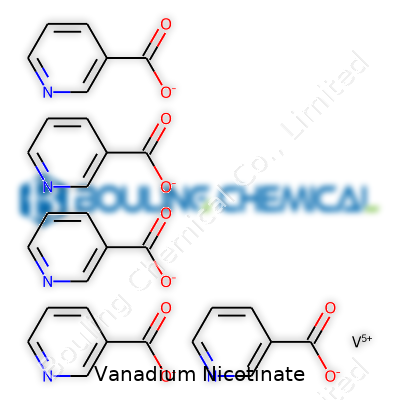
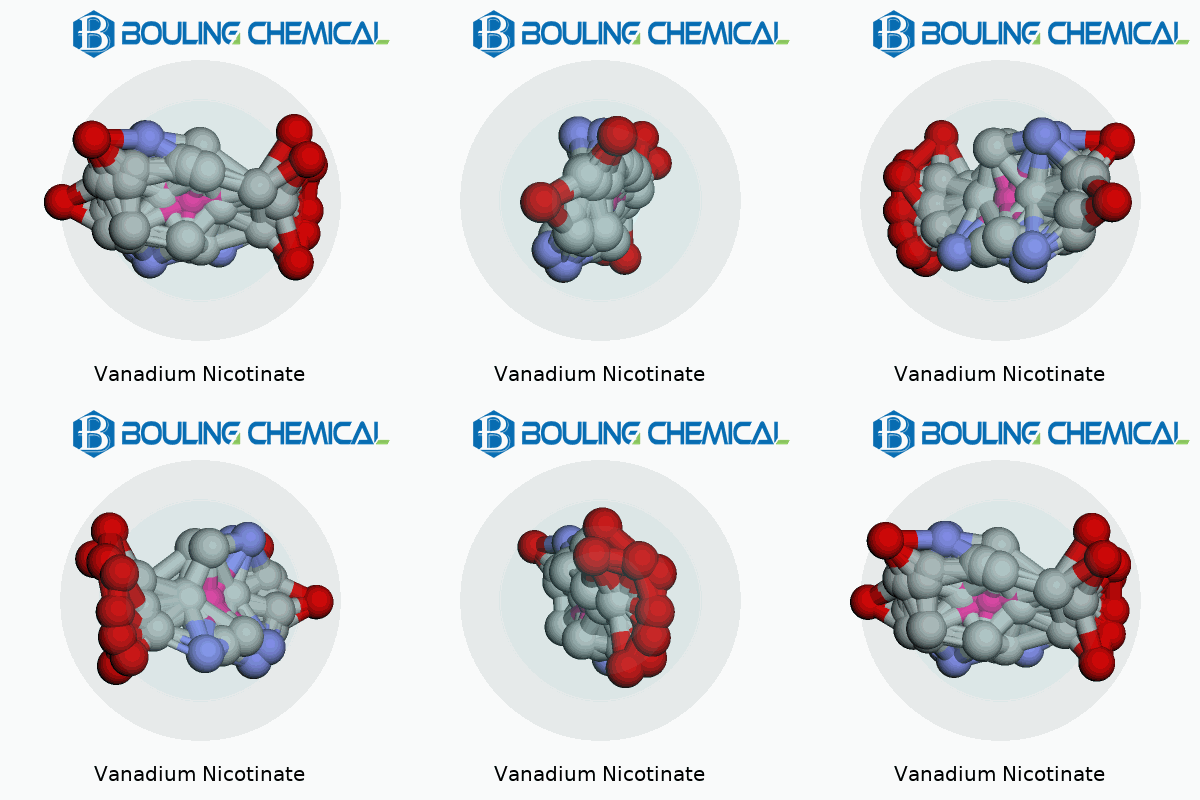
Vanadium nicotinate blends vanadium, a transition metal, with nicotinic acid, better known as vitamin B3’s family member. The chelation of vanadium with the nicotinate group aims to smooth the rough biological ride that plain vanadium salts tend to cause in living organisms. This compound often appears in powder or capsule forms, intended either for lab research or specialty nutrition products. With a metallic tang and mild pink hue, this compound’s visual traits match the unique chemistry within.
Physical & Chemical Properties
This organometallic compound usually shows up as a pale pink or faint purple powder. Solubility ranges from moderate to good in water, which matters for pharmaceutical and research applications. Vanadium in the +4 or +5 oxidation state typically links with the carboxyl group of nicotinate, with the structure more resilient against reduction and hydrolysis than plain vanadyl sulfate. Molecular weight hovers around 300-350 g/mol, but actual mass depends on hydration and exact crystalline form. Hygroscopic tendencies mean the compound sometimes picks up moisture if left unsealed.
Technical Specifications & Labeling
Suppliers offering vanadium nicotinate usually report purity by HPLC, with lab-grade materials running above 98 percent. Labels must list both the elemental vanadium content and the exact ligand ratio. Some regional regulations, especially in the European Union, require warnings for toxic effects with excessive intake. Package inserts in research-grade vials note storage conditions, typically recommending temperatures below 25°C, tightly sealed, and out of direct sunlight. The batch certificate often outlines heavy metal limits, showing care for cross-contamination—this matters in clinical and food research, where trace lead or cadmium can easily throw off results.
Preparation Method
Making vanadium nicotinate in the lab generally starts with vanadyl sulfate or another simple vanadium salt and excess nicotinic acid. Stirring these in aqueous solution under mild heat encourages chelation. After several hours, the solution changes color—a shift researchers recognize as a clue to successful ligand exchange. Filtration and washing remove byproducts, with drying under vacuum yielding the finished powder. Some manufacturers repeat this process at larger scale, often tweaking reaction pH or adding binding agents to push yield higher or guarantee a specific crystalline morphology.
Chemical Reactions & Modifications
Vanadium nicotinate handles minor redox challenges thanks to its relatively stable chelation. The vanadium core flips between +4 (vanadyl) and +5 (vanadate) states under oxidizing or reducing conditions. These electronic changes alter color—the compound can fade towards blue or shift to deeper pink depending on its oxidation number. In research contexts, chemists sometimes swap out the nicotinate ligand with other related carboxylates to investigate absorption or bioactivity differences. The chelate resists breakdown in mild acid, but concentrated bases can open the ligand framework, liberating vanadium ions and free nicotinic acid.
Synonyms & Product Names
In catalogs, vanadium nicotinate might show up as vanadium(IV) nicotinate, vanadyl nicotinate, vanadium pyridinecarboxylate, or just “VN” among researchers. Health supplement vendors sometimes market it under “Vanadium Nicotinate Complex” or “Bioactive Vanadium B3.” These aliases can cause headaches for those comparing studies or sourcing research-grade material, so it helps to check the molecular formula or request a certificate of analysis before running experiments or planning trials.
Safety & Operational Standards
Vanadium compounds don’t enjoy a reputation for safety at high doses. Long-term exposure—especially through inhalation of dust or powders—has links to respiratory irritation or even kidney damage in some animal studies. Vanadium nicotinate, with its organic chelation, moderates some acute toxicity, but not enough to treat it as harmless. Labs working with this compound usually deploy fume hoods, nitrile gloves, and, at larger scales, particulate masks to cut exposure. Storage in amber glass vials minimizes photodegradation and accidental contact. Transport guidelines suggest double-bagging sealed powders, and quick cleanup of spills with damp cloths to keep dust out of the air.
Application Area
The compound mostly finds a home in early-stage metabolic and diabetes research. Rodent studies regularly employ vanadium nicotinate to explore its potential as an insulin mimetic, with some researchers testing its effect on glucose uptake and lipid metabolism. A few niche supplement manufacturers include it in formulations targeted at glucose control, though regulatory authorities in the United States and Europe have placed strict caps on allowable vanadium content in over-the-counter products. Analytical chemists and pharmaceutical developers test vanadium nicotinate as a model compound for chelation studies, hoping to unravel how its stability and absorption compare to plainer vanadium sources.
Research & Development
Current research clusters around two primary questions. Can vanadium nicotinate deliver metabolic benefits without the legacy toxicity seen in other vanadium formulations? How do chelation and ligand design affect absorption and tissue targeting? Some animal model research suggests the nicotinate ligand can slow renal clearance and improve cellular uptake, at least compared to vanadyl sulfate. A handful of small clinical trials probe safety margins and dose-response, but regulatory hurdles have kept these studies small and infrequent. Recent interest in chelation for metal-based drugs, especially outside diabetes, stirs up hope for wider uses—including neurological and cancer research.
Toxicity Research
Toxicology on vanadium nicotinate still lags behind the more common vanadyl and vanadate salts but growing demand pushes academics and industry to fill the gap. Rodent studies report oral LD50 values in the high milligrams per kilogram range, suggesting moderate acute toxicity. Blood markers signal early kidney and liver stress at much lower, repeated doses. The nicotinate component, already familiar to the body, does little to shield organs from vanadium’s long-term effects once chelation breaks down. Chronic exposure, even to low levels, still risks accumulation in bone and kidneys. Regulators carefully monitor any claim of use in food, supplements, or pharmaceuticals, pointing out the narrow safety window defined by animal studies.
Future Prospects
Researchers searching for better metal-based therapies keep vanadium nicotinate in the conversation, though challenges remain. Ongoing work aims to sharpen the line between helpful and harmful doses, parsing out how different ligands alter biological distribution. Pharmaceutical players see potential in creating slow-release forms or pairing the compound with transport enhancers to target specific tissues. Bioavailability and safety both raise hurdles, but each step toward understanding this compound’s chemistry brings closer the possibility of safer metabolic modulators or even next-generation anticancer agents. More clarity around the molecular dynamics, especially in living systems, will shape vanadium nicotinate’s place in tomorrow’s medicine cabinets or research benches.
Understanding Vanadium Nicotinate
Vanadium often flies under the radar compared to other minerals, but it’s a trace mineral that makes its way into some health conversations, especially for those keeping an eye on blood sugar and metabolism. Vanadium nicotinate blends vanadium with nicotinic acid (a form of niacin), aiming to harness both elements for better absorption and possible health support.
Supporting Blood Sugar Control
People looking for extra help managing blood sugar often hear about vanadium. Some small studies and lab research suggest it may mirror insulin’s role, helping cells better take in glucose and support steadier blood sugar. One study in diabetic rats found their blood glucose dropped after vanadium supplementation. Similar small-scale research in people with diabetes showed some improvements in fasting blood sugar and A1C, but these studies came with short timelines and tiny sample sizes.Anecdotal reports, including stories from people with insulin resistance, describe slight energy boosts and fewer sugar crashes. For someone living with type 2 diabetes, any edge in glucose management can make a day feel more predictable. Of course, every new supplement needs the backing of larger, quality clinical trials to truly earn its place at the table.
Possible Role in Heart Health
Cardiovascular health comes up a lot with trace minerals. Vanadium might have a hand in cholesterol metabolism. There’s talk about it possibly lowering LDL cholesterol and raising HDL, though most findings come out of animal studies. In research on rats, vanadium helped balance out damage caused by a high-fat diet.As a person who comes from a family loaded with heart risk factors, I notice every bit of research linking minerals like vanadium to cholesterol balance. While real impact in people isn’t proven, it’s not hard to see why some folks hoping to improve their numbers would look at supplements in addition to the classic advice—healthy food, exercise, and smart medication use.
Metabolic Support and Energy
Vanadium gets some attention for its possible effect on metabolism. With obesity and metabolic syndrome affecting so many people, the promise of even subtle improvements stands out. Some research points to a shift in how the body uses carbs and fats, though nobody should expect miracles. Combining vanadium with nicotinic acid aims to support cellular energy, since both play roles in how cells process nutrients.Working long days and chasing after kids, energy support sounds tempting. Still, experience teaches me that no pill replaces a solid meal and sleep. For people with low energy and metabolic slowdowns, it makes sense to dig into all possible avenues, but it’s crucial to remember the basics.
Safety Considerations
Nothing about vanadium should be taken lightly. At high doses, it can be toxic and may cause irritation, stomach trouble, or long-term effects nobody wants. The National Institutes of Health notes that most people already get enough vanadium in their diet. Multivitamins rarely add more, and most experts urge deep caution before picking up vanadium supplements—especially those with medical conditions or on other medications.
Moving Forward—Advice for Anyone Considering Vanadium Nicotinate
Most of what we know about vanadium nicotinate comes from early, small experiments or personal stories. The best course for someone looking to try it: speak with a trusted healthcare provider and focus on proven strategies alongside any new supplements. Blood sugar, heart health, and energy involve more than single minerals or vitamins. Real improvement usually comes from a mix of movement, balanced eating, medication management, and wise supplement choices supported by evidence.
Looking for Clarity Around Dosage
Vanadium plays a minor role in the body, and vanadium nicotinate has started turning up on shelves anywhere supplements are sold. Many folks picking up this bottle are interested in supporting healthy blood sugar. It’s easy to get lost in the sea of numbers and recommendations online, especially with a mineral that doesn’t have an official dietary guideline.
What Science Says So Far
No government or major health body has set a Recommended Dietary Allowance (RDA) for vanadium. Research shows most people already get 6 to 18 micrograms from food alone. The focus on vanadium nicotinate emerges from a handful of studies, many using vanadyl sulfate, with daily doses as high as 100 milligrams or more. Researchers still disagree about whether that much vanadium actually works or is even safe for most people. It gets even trickier with less-studied forms like vanadium nicotinate.
I looked at published trials and rarely see doses with vanadium nicotinate go past 15 milligrams daily. Most brands recommend a serving around 5 to 10 milligrams. The body only absorbs a fraction of the dose, and the kidneys handle elimination. Studies have shown long-term, high-dose vanadium supplements can raise risks for digestive distress and kidney problems.
Sticking Close to What’s Safe
Doctors and toxicologists agree that the lower the better, unless you’re in a tightly controlled study. The European Food Safety Authority recommends a tolerable upper intake level of 10 micrograms per kilogram of body weight per day—this is for total vanadium from all sources, not just supplements. For an adult weighing 70 kilograms (about 154 pounds), that’s around 700 micrograms—much less than many supplements provide.
Labels on vanadium nicotinate supplements usually call for one capsule each day, about 5 to 10 milligrams. Folks who eat a balanced diet might not need extra at all. Taking a higher dose for weeks or months creates more risk than benefit, since the body can’t use large doses efficiently. People with kidney disease or liver problems should talk to a qualified health provider before even considering this supplement.
Why Medical Input Matters
No nutrient should be taken lightly. Using vanadium nicotinate for blood sugar or metabolism requires real care. Doctors who specialize in nutrition and metabolic health usually urge patients to start low and run bloodwork to track changes. Any sign of gastrointestinal symptoms, joint pain, or strange taste in the mouth calls for stopping immediately.
Blood sugar management depends much more on balanced eating, consistent exercise, and any prescribed medications than on a mineral found in tiny amounts in the diet. Relying on supplements to replace those pillars rarely gives lasting results. Friends I know who have tried vanadium on their own found the best success not by bumping up their dose, but by building better overall daily habits.
What’s Worth Remembering
Vanadium nicotinate sits at the edge of nutritional science, not the center. If you feel you need support for your metabolism, talk with a healthcare professional before picking up a supplement. A qualified dietitian or physician can help weigh the risks, benefits, and alternatives. Making nutrition decisions together builds real knowledge and helps avoid choices that could backfire.
For anyone set on trying vanadium nicotinate, keep amounts at or below what products list on their labels, usually 5 to 10 milligrams per day, and only for a short term. Let curiosity drive research, but let safety steer the wheel.
What Is Vanadium Nicotinate?
Vanadium nicotinate belongs to a newer class of dietary supplements that often show up in products meant for blood sugar support or metabolic health. Vanadium itself traces a legacy in trace mineral research. Though it stands far from the mainstream, some people looking for a sharper edge against diabetes or fatigue look to it. The idea behind combining vanadium with nicotinate is simple—take the mineral and couple it with a vitamin B3 form to boost absorption or potential benefits.
Possible Side Effects
Vanadium sits firmly on the line between essential trace mineral and toxic metal. The body does use vanadium in tiny amounts, but safe daily needs hover closer to micrograms than the milligrams found in most supplements. Scientists have seen that vanadium, especially at higher doses, can pile up in tissues like the bones and liver. This is where questions about risk start to pop in.
Common reports from supplement users include stomach pain, diarrhea, and nausea. I’ve spoken to people who felt their gut rebel after just a few days of use. All minerals in excess can create mischief, but vanadium appears quicker to upset digestion. Some studies from the 1990s pointed out a metallic taste in the mouth and greenish tongue—funny enough, but it shows how quickly vanadium can leave its fingerprints, even at doses below 50 mg per day.
Bigger Risks: Blood Sugar, Kidneys, and More
The interest in vanadium grew after some early trials suggested it could help people with diabetes by mimicking insulin. The catch is that vanadium doesn’t know how to stop. Blood sugar can drop too low, especially in people already using medicines for diabetes. My own physician shared cases where patients risked dangerous hypoglycemia after stacking supplements like vanadium on top of their prescriptions.
Toxicity remains the bigger elephant in the room. Animal studies exposed to high vanadium doses developed kidney and liver issues. The World Health Organization keeps a close watch, setting strict limits for safe vanadium intake, far below levels seen in some supplements. An excess tends to strain not just one organ, but several.
Who Faces the Most Risk?
Anyone with kidney disease, liver issues, or unstable blood sugar should steer well clear. Pregnant people, young children, or those with weak immune systems face a sharper edge from risky minerals. In my experience, people often forget that supplements skip the same testing as medicines. You might get variability in dose or even contamination with other problematic metals. Supplement labels do not equal safety.
Science Gaps and What Can Help
Big gaps in research surround vanadium nicotinate. Plenty of theories swirl around about using vanadium for diabetes, bone health, or even as a performance booster, but long-term, peer-reviewed trials are missing. No healthcare provider I know recommends vanadium as a stand-alone fix.
Smarter steps start with talking to your doctor. Always ask about supplement-drug interactions, and bring every bottle to your annual checkup. Check labels for third-party testing seals to cut the risk of contamination. If blood sugar is the main concern, proven routes like healthy eating, regular movement, and medical therapy take priority every time. There’s no magic mineral that makes those basics obsolete.
The Promise of Minerals in Diabetes Management
People with diabetes keep searching for safer, simpler ways to manage blood sugar swings. Insulin and certain medicines come with their own set of worries—costs, shortages, and daily juggling acts. That’s probably part of why vanadium nicotinate, a supplement mixing the trace mineral vanadium with niacin (nicotinic acid), keeps popping up in online conversations. It sounds like a chemistry project, but at its core, the idea is simple: If vanadium mimics insulin in the body, could it help keep glucose in check?
Fact Check: What Science Says About Vanadium
Vanadium has found its way into some supplement bottles, especially those aimed at athletes and people with diabetes, based on research from decades ago. Laboratory studies show that vanadium can act a bit like insulin in cell cultures and in animals: cells absorb more glucose, and blood sugar levels can drop. These results look good in controlled settings, but real-life diabetes in humans isn’t managed in a petri dish.
Clinical trials involving people paint a mixed picture. Small studies—the kind with fewer than 40 people—suggest a modest drop in fasting blood sugar when folks take vanadium compounds. Doses in these studies range from 50 mg to 150 mg per day, which sits much higher than what most get from food or water. Few trial participants reported major side effects, but common complaints included digestive trouble and a weird metallic taste.
The way vanadium works in the body remains hazy. Some researchers point to improved signaling in the body’s insulin pathways, but nobody has directly shown that vanadium can stand in for insulin as the main act. More importantly, long-term safety hasn’t been nailed down. Vanadium accumulates in the body, so taking large doses day after day means playing a risky game, especially for kidneys.
Behind the Hype Around Vanadium Nicotinate
Consumers reading supplement ads or blog posts may feel tempted because promises of “natural” control for type 2 diabetes come across as less scary than shots or strong medication. I've watched friends and acquaintances reach for these kinds of neatly packaged solutions, only to land back at square one—or sometimes in the hospital when something didn’t work out as planned. The biggest risk is not just from potential side effects, but from the distraction: thinking a pill can replace proven care may delay proper treatment.
Adding niacin into the mix raises its own concerns. Niacin, in high amounts, can cause liver inflammation and flushes. The combination with vanadium hasn’t been studied much in published human research, so nobody knows for sure how these two interact at high doses over time.
Where to Look for Better Solutions
Blood sugar control remains a stubborn challenge, even as new treatments hit the pharmacy shelves. The best approach involves regular checkups, honest conversations with doctors, and routines built around diet, activity, and proven medications. Some supplements do play a role—chromium, fiber, and certain plant extracts show promise—but every extra pill or powder should be treated as a piece of a larger puzzle, not the solution itself.
Until large, well-designed trials show clear benefits and long-term safety, vanadium nicotinate belongs in the “interesting, not essential” category. For anyone thinking about adding it to diabetes management tools, a doctor’s guidance remains more important than any label claim.
Untangling the Concerns Around Vanadium Nicotinate and Drug Mixes
Vanadium, a trace mineral, gets attention for its possible role in blood sugar control. Some gym-goers and health enthusiasts look at vanadium nicotinate as a supplement, drawn in by early research that hints at insulin-like actions. Still, curiosity often turns into worry: can this mineral safely hitch a ride with those other bottles on the shelf—prescriptions, vitamins, herbs?
Expert Guidance and the Few Human Studies So Far
Doctors and pharmacists don’t see vanadium on medicine cabinets every day, but some folks with diabetes or metabolic issues have tried adding vanadium nicotinate. Clinical trials in humans remain rare. The best experiments run short, so the world knows little about mixing it with other substances, especially over months or years.
The FDA hasn’t given this supplement its official stamp for treating disease. So, most prescribers fall back on the usual rule: treat untested things as unpredictable. My own family member once tried a supplement stack, juggling vanadium with prescribed diabetes pills and all-in-one multis, hoping for an energy boost. Instead, fatigue and upset stomach moved in. The doctor found low blood sugar, which could have slipped under the radar if we hadn’t tracked symptoms closely.
Interactions: Blood Sugar, Kidneys, and the Unknowns
Vanadium might mimic insulin. That can mean sudden drops in blood sugar when mixed with sulfonylureas, metformin, or even herbal teas that affect glucose. Elderly folks or those with kidney problems face bigger risks, since vanadium filters out through urine. Add a diuretic or kidney-stressing medication, and things can go sideways fast. Plus, vanadium builds up in bone, kicking up questions about how it might affect other mineral levels if taken with supplements like calcium or magnesium.
Stomach distress, cramps, and greenish tongue—yes, this mineral sometimes colors a mouth—pop up often in clinical notes, especially when mixed with other dietary supplements. I’ve seen patients assume "natural" means harmless, only to land in the ER with pain or palpitations. A basic blood test and pill count at the checkup would have flagged the odd combo.
Sorting Fact from Fiction: E-E-A-T and Vanadium
Healthcare rests on expertise—years of science and patient care. Most vanadium studies use animal models or test tubes, not people with complicated medical lives. Credible sources like the National Center for Complementary and Integrative Health call for long-term human trials before making promises about safety or benefit.
Clear evidence speaks loudest: sharing every supplement and medication with your doctor, pharmacist, or registered dietitian makes a real difference. These experts can spot conflicts early, check for kidney or liver warning signs, and provide lab testing that catches issues before they turn serious.
Better Choices: Planning, Communication, and Caution
People can lower their risk by sticking with trusted brands that share ingredient lists and third-party lab results. Looking for unbiased reviews and reading research from university hospitals or government agencies helps filter out sales hype. Family support, a doctor’s ear, and good note-keeping—writing down all pills and timing—turn a risky experiment into something trackable and much safer.
Vanadium nicotinate sounds promising in early headlines, but experience says it pays to tread carefully, especially with other medications or supplements along for the ride.