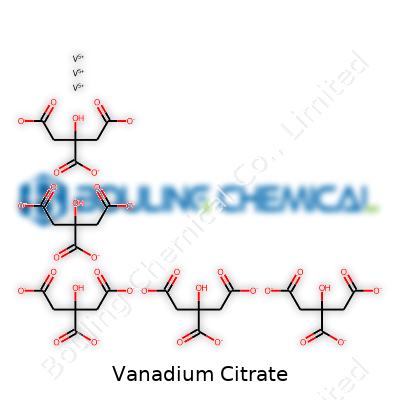
Vanadium Citrate: A Detailed Commentary
Historical Development
Vanadium citrate has a story that stretches back to the early expansion of inorganic chemistry. Vanadium itself gained attention after Spanish scientist Andrés Manuel del Río isolated it in the late 18th century, long before industrialists realized its value in alloy production and chemical engineering. With greater insight into vanadium’s chemical versatility, researchers began combining it with organic acids, including citric acid. Initially, these studies aimed to explore new coordination compounds for therapeutic and industrial purposes. Today, the path that started with academic curiosity now feeds into commercial applications, fueled by a continued hunger for novel metal-organic materials that promise to improve everything from chemical synthesis to disease management. Past experiments set the stage for today’s focus on vanadium citrate as both a reagent and a research target across scientific disciplines.
Product Overview
Vanadium citrate falls under the category of metal-organic complexes, combining vanadium, often in its trivalent or pentavalent forms, with citric acid anions. Chemists and material scientists value its redox chemistry and solubility profiles. A typical sample comes as a fine green-to-blue powder, easily identified in the lab thanks to its color and faint acidic smell. Laboratories and manufacturers package this compound for use in catalyst development, nutritional studies, and even experimental medicine. Commercial suppliers offer vanadium citrate with varying purities, tailored for either research, pilot-scale production, or advanced, application-specific industries.
Physical & Chemical Properties
This compound’s physical form makes it a natural fit for solution-based reactions and analytical work. The color changes in response to pH or oxidation state, swinging from green to blue or sometimes even purple, reflecting vanadium’s unique transition metal behavior. It dissolves in water more readily than many other vanadium salts, a practical advantage in both lab and industrial settings. Chemically, vanadium citrate carries strong chelating properties, binding with multiple metal ions and resisting hydrolysis even at moderate temperatures. This stability stems from the entwined structure of the citrate ligand gripping the vanadium ion, which helps prevent oxidation-reduction beyond the desired state.
Technical Specifications & Labeling
Professional-grade vanadium citrate must meet tight purity standards, typically exceeding 98% purity by assay. Impurities such as other metals, organic residues, or chloride ions must remain below thresholds established by local and international regulations. Precise labeling should provide batch numbers, molecular weight, water content, and recommended storage conditions. Documentation often includes intended use, along with shelf life and any hazardous material specifications. Reliable suppliers back up these details with certificates of analysis and occasional third-party verification, which builds trust with end-users and regulators alike.
Preparation Method
Preparation routes for vanadium citrate usually begin with vanadium pentoxide or a simple vanadium salt. A stoichiometric ratio of vanadium oxide and citric acid, dissolved in deionized water, starts the process. The mixture requires careful temperature control and pH monitoring, pushing the reaction forward while keeping unwanted byproducts at bay. Some methods rely on slow crystallization and filtration, followed by vacuum drying to remove moisture. Experienced chemists keep a sharp eye on color changes as an indicator of the desired vanadium oxidation state. Once dried and ground, the powder gets packaged under inert conditions to preserve its chemical integrity for use in labs or manufacturing.
Chemical Reactions & Modifications
Vanadium citrate’s reactivity draws a crowd among researchers. It acts as a mild oxidizing agent, with the ability to flip between vanadium's oxidation states under moderate conditions. Addition of reducing agents can push vanadium(IV) to vanadium(III), modifying the color and even the reactivity of the compound. Exposure to concentrated acids or bases triggers ligand exchange or hydrolysis, which alters both structure and performance. Blending with other chelators or metals can spawn hybrid complexes, each with special catalytic or biological properties. These modifications give chemists room to develop targeted catalysts or even probe biochemical pathways that involve metal ions.
Synonyms & Product Names
On the market and in literature, vanadium citrate appears under several aliases. Common names include “vanadyl citrate,” “citrato de vanadio,” and sometimes “vanadium(III) citrate.” Some suppliers use proprietary or branded labels, tacking on modifiers for purity, hydration level, or specific formulation—like “Vanadyl Citrate Monohydrate Pure Grade.” This variety of product names stems from both regional language differences and the proliferation of chemical databases trying to nail down synonyms for traceability and regulatory paperwork.
Safety & Operational Standards
Handling vanadium citrate requires attention to both occupational health and environmental impacts. Most safety data sheets call for gloves, goggles, and workspace ventilation to limit skin contact and inhalation. Chronic exposure to vanadium compounds connects to respiratory and gastric problems, with some evidence suggesting nephrotoxicity at higher doses. Because the same properties that make vanadium citrate valuable in industrial catalysis and research also create bioactive hazards, professionals must store it away from food, oxidizers, and direct sunlight. Proper disposal, guided by hazardous waste regulations, guards against contamination of local waterways or soil. Industrial users must also educate staff routinely to reinforce safe practices.
Application Area
Researchers and industry professionals look to vanadium citrate for a slate of uses. As a catalyst precursor, it steps into the spotlight for oxidation and polymerization reactions that underpin green chemical manufacturing or materials science innovation. Some agricultural scientists explore its micronutrient properties, while nutrition researchers test its insulin-mimetic actions in diabetes models. Pharmaceutical projects probe its cellular uptake and possible anti-cancer activities, motivated by vanadium citrate’s unique blend of solubility and biological effects. Environmental engineers have tested it as a potential water treatment agent, hoping to trap heavy metals or degrade stubborn pollutants. Each area sparks specialized modification and handling protocols, reflecting the breadth of vanadium citrate’s industrial and laboratory footprint.
Research & Development
R&D teams across the globe chase down new applications and insights for vanadium citrate. Some push at the biochemical boundaries, tracking how vanadium citrate interacts with cellular enzymes or cell membranes. Others zero in on synthetic strategies, aiming to tune stability and reactivity with altered ligands or oxidation states. The pharmaceutical sector tests bioavailability and toxicity in preclinical models, hoping to advance treatments that ride the line between essential trace elements and potent therapeutics. In the energy field, scientists are examining vanadium citrate as a starting point for advanced battery electrolytes and corrosion-resistant alloys, hoping to stretch performance limits and lifespan. Collaboration between academic and industrial outfits keeps this momentum strong, fostering cross-disciplinary breakthroughs that redefine what vanadium citrate can do.
Toxicity Research
Vanadium’s biological effects have earned it a complicated reputation. While the element is essential in small amounts for some organisms, the difference between nutritional benefit and toxicity is slim. Vanadium citrate follows this pattern. In cell culture, animal models, and limited human studies, researchers track blood levels, organ accumulation, and side effects after administration. Toxicity mechanisms often involve oxidative stress, enzyme interference, or immune responses. Renal function and liver panels get close monitoring, especially during longer-term dosing. Some studies raise concerns about cumulative exposure, especially because vanadium can linger in bone and muscle. These findings push regulators to set strict exposure limits for both workplace and consumer use, and underscore the need for careful labeling, safe packaging, and clear user education.
Future Prospects
Looking forward, vanadium citrate sits in the crosshairs of several advancing fields. Green chemistry projects seek better catalytic supports as the world hunts for more sustainable chemical production, and vanadium citrate’s reactivity makes it a favorite for pilot projects. Pharmaceutical hopes ride high on the compound’s dual role as an enzyme modulator and potential insulin mimic, though concerns about side effects force careful stewardship and deeper investigation. Breakthroughs in battery technology often start with transition metal complexes like vanadium citrate, and as demands for energy storage grow, so does interest in new electrolyte formulations. Education about safe handling and environmental impact guides these ventures, keeping innovation in balance with responsibility. The interplay between discovery, commercial potential, and health research will shape where vanadium citrate lands in tomorrow’s technology landscape.
Practical Value in Supplements
Vanadium citrate shows up most often in the world of health supplements. Fitness enthusiasts and people with an eye on blood sugar support reach for it, hoping for better control and performance. My introduction to vanadium citrate came through a friend’s bodybuilding routine; he swore by its role in helping his glucose management. An interest in this mineral complex grew after reading studies that hinted at better insulin sensitivity for some users, particularly people tracking blood sugar closely.
How Does It Work in the Body?
Vanadium is a trace mineral—humans don’t need much, but it pops up in small doses in many foods. Vanadium citrate combines this element with citric acid, giving it greater solubility and making it easier for the body to soak up. The body seems to use vanadium in ways that mimic insulin, the hormone responsible for moving sugar from the bloodstream into muscles and out of harm’s way. This ability draws people who want another tool in their blood sugar management kit.
Evidence and Caution
Some research points to vanadium supporting blood sugar balance, yet proven benefits stay modest at best. Diabetics and pre-diabetics sometimes turn to vanadium citrate in hopes of a non-pharmaceutical edge. A paper in the journal Diabetes Care showed that vanadium supplements produced small drops in fasting glucose after several weeks, but results never matched those of prescription medicine. Scientists still puzzle over the long-term impact—so it pays to be careful. Issues like stomach discomfort, mood changes, and kidney strain pop up in medical literature after high doses. Anyone curious about vanadium citrate’s effects should talk to a trusted healthcare provider.
Other Uses Outside Supplements
Manufacturers sometimes use vanadium compounds in chemical and industrial settings, but vanadium citrate seems to surface most where human health is the focus. A few specialty labs mix it into research chemicals, mainly for work related to diabetes or metabolism.
Quality, Sourcing, and Safety Concerns
Supplements come with a big catch—the regulation game in the supplement industry doesn’t mirror the pharmaceutical world. Products from less-reputable suppliers may carry inaccurate labels or hidden contaminants. A 2017 report from ConsumerLab revealed that some vanadium supplements carried far less, or far more, than what their labels claimed. People deserve access to clean, reliable ingredients, and that means pushing for stronger oversight. I stick with brands whose third-party testing is visible and easy to check.
Doctors and registered dietitians sometimes frown on over-the-counter minerals, and with good reason—body chemistry shifts with even trace amounts. Responsible manufacturers, clear labeling, and direct communication with health professionals help avoid trouble. If the supplement industry took quality control as seriously as the food or medicine business, confidence would rise and negative incidents would drop.
Moving Forward Responsibly
Vanadium citrate carries real promise in a handful of medical trials, mostly for blood sugar support. Fads drift in and out, but proven science always wins in the end. Those seeking to add minerals should track what they take and keep health pros in the loop. Awareness, vigilance, and education build better outcomes, leaving fewer surprises down the road.
Trying to Find the Truth Behind Vanadium Citrate Supplements
Interest in vanadium citrate as a dietary supplement keeps popping up. A lot of this comes from the buzz around trace minerals and their possible roles in staying healthy or even managing blood sugar. The idea of taking a simple pill to help with energy, metabolism, or blood sugar dips into deep hopes we all share. But sorting facts from hype can be tricky without some honest talk.
What Vanadium Does in the Body
Vanadium is a trace element, and yes, our bodies hold only tiny specks of it. Some research points out that vanadium can influence enzyme activity, especially ones tied to carbohydrate and fat metabolism. Folks reading about early animal studies might see claims about “insulin-mimetic” effects, which means vanadium seems to behave like insulin in rats. That’s where the supplement story starts.
Peeling Back the Evidence
If you’re wondering whether real science backs up the supplement push, it pays to dig deeper. Carefully done studies in actual people don’t pan out like the animal experiments. Diabetes researchers, including those mentioned in Diabetes Care and other peer-reviewed sources, show vanadium has mild effects at best—even for blood sugar. And most clinical trials don’t back the bold promises from supplement makers.
There’s another point here: vanadium citrate doesn’t show up naturally in common foods the way magnesium or potassium do. You won’t fill your plate with a vanadium-rich salad or sip it in fruit smoothies. Most people, through daily eating, already get enough vanadium for the body’s needs. So taking a supplement doesn’t fill an obvious gap like vitamin D or B12 might for certain high-risk groups.
Sizing Up Potential Risks
By the time vanadium gets processed as citrate and put in capsules, questions about safety get even more important. In practice, vanadium absorbs poorly in the gut, but if people take higher doses, it can build up in tissues. That leads to concerns raised by the National Institutes of Health and European Food Safety Authority. Some side effects include digestive discomfort, greenish tongue, and in bigger doses, kidney or liver stress. There’s no official safe upper limit for vanadium intake set by the FDA, so supplement doses can swing wildly.
Supplements Need Trustworthy Oversight
Walking through any supplement aisle, shoppers face a flood of choices. The supplement industry isn’t policed like pharmaceuticals; bottles don’t have to prove results or guarantee purity before reaching the shelf. Cases of heavy metal contamination in unregulated supplements—documented by Consumer Reports and academic labs—keep me cautious. Seeing labels with exotic ingredients like vanadium citrate feels a lot less exciting when remembering this risk.
Reflecting on Smarter Choices
People who want better blood sugar control or improved health won’t find reliable fixes in vanadium supplements. Staying active, choosing slow-digesting carbs, and talking with a doctor about truly proven options go further. Supplements still have a place, but this one just doesn’t stand out for safety or results. It pays to put more trust in what’s been tested, and less in what’s been hyped.
Understanding Vanadium Citrate’s Role
Vanadium citrate gained attention from fitness circles, biohacking enthusiasts, and some alternative health practitioners. The mineral vanadium, found naturally in certain foods and drinking water, plays a trace role in the body. Interest grew from early research suggesting vanadium compounds might support blood sugar regulation or improve insulin sensitivity. Vanadium citrate, a specific formulation, gets marketed for these supposed benefits. But interest in supplements always needs to be balanced with safety concerns.
Possible Side Effects: What Happens to the Body?
I’ve seen more than a few clients pick up trendy supplements after reading about them online. Many assume that because vanadium’s found in foods like mushrooms, shellfish, and black pepper, it must be harmless. That’s not the full story. At levels higher than you’d get from food, vanadium citrate can cause headaches, stomach cramps, diarrhea, nausea, or even a metallic taste. Those signs often serve as red flags the body is telling you it’s had enough.
Over time, regularly taking vanadium in high supplemental doses can lead to more worrying effects. Studies link long-term high vanadium intake with kidney problems, changes in how the liver works, and even shifts in blood cell counts. One paper in the Journal of Toxicology and Environmental Health detailed cases where athletes developed digestive upset, fatigue, and even low-grade anemia after using vanadium-containing supplements over several weeks.
People already managing diabetes or kidney conditions run higher risks. Vanadium citrate could put extra burden on already sensitive organs or interact poorly with medications like metformin or insulin. Blood sugar drops too far — and suddenly hypoglycemia becomes more than a theoretical problem. Doctors I know urge regular monitoring for anyone with diabetes considering this supplement.
Why Side Effects Get Overlooked
Marketing around vanadium citrate often focuses on supposed benefits, skimming over real risks. A glossy label promises “normal blood sugar,” but downplays digestive complaints or organ stress. Many supplement users never report minor discomfort, chalking it up to something they ate. Others don’t tell their doctors about supplements at all. Out of curiosity, I once did an informal survey among gym-goers: maybe one in ten could tell me about known side effects.
Taking Responsibility With Supplements
The FDA doesn’t review dietary supplements the way prescription drugs are scrutinized. Companies can sell vanadium citrate without comprehensive long-term safety studies. For anyone thinking about trying it, common-sense steps can help prevent harm. Always read labels for serving size — some brands pack in much higher doses than others. Consulting a healthcare professional before starting a new supplement matters, especially if you take medications or have existing health conditions.
Some individuals feel drawn to the idea of “natural” health solutions, but “natural” doesn’t equal “risk-free.” Skipping routine blood work, ignoring persistent digestive issues, or combining multiple supplements can turn a minor problem into something bigger. Community forums and online reviews can highlight patterns of side effects, but these shouldn’t replace advice from licensed professionals or established research sources.
Choosing supplements should be an informed, personal decision, but awareness about real risks turns that decision into a smart one.
Personal Encounters with Supplement Confusion
Vanadium citrate floats around the world of dietary supplements, often pitched as a solution for everything from blood sugar swings to workout gains. Years ago, I glanced at a bottle in a health food store and wondered: how much do people really know about what they’re taking? Plenty of supplements promise results but rarely talk about safe amounts or long-term effects. I’ve talked with healthcare professionals who say most people need real clarity before popping another pill, especially when it comes to minerals like vanadium.
Looking Closer at Vanadium’s Role in the Body
Vanadium itself is a trace mineral found in foods like mushrooms, shellfish, black pepper, and grains. In animal studies, it has shown some influence on blood sugar regulation, leading supplement companies to market vanadium citrate to people hoping for an easy fix for their glucose issues or for those chasing athletic improvements. Still, the body doesn’t seem to require much vanadium—if at all. No major nutritional organization lists vanadium among essential nutrients in standard dietary guidelines, so no official daily intake recommendation exists. The World Health Organization estimates that people might eat about 10 to 30 micrograms each day from their diet, with no evidence suggesting most folks face a shortage.
What About Dosage Recommendations?
Despite the mystery, supplement labels often suggest taking between 10 micrograms up to 50 milligrams per day. That’s a staggering spread. Human research mostly uses doses under 100 micrograms, with some studies climbing as high as 1 milligram per kilogram of body weight in type 2 diabetes trials. The higher side of that range caused side effects like diarrhea, cramps, and even kidney strain. The U.S. National Institutes of Health flags vanadium as “possibly unsafe” at doses over 1.8 milligrams daily, especially over extended periods. Experience and evidence tell us: more doesn’t mean better, and safety deserves the front seat.
Real Danger: Not All Information Is Created Equal
Internet forums often buzz with personal testimonials, but few mention the toxic risks. Excess vanadium collects in the bones and organs, and too much at once leads to nausea, bone pain, and nerve issues. Children and pregnant women, in particular, face higher risk for harm. Reputable sources like the NIH or Mayo Clinic stick to a cautious stance about self-medicating with vanadium citrate, suggesting real conversations with medical experts before considering supplementation.
Practical Steps Toward Safe Supplement Use
The supplement industry operates with less scrutiny than prescription drugs. Product labels may give vague instructions with limited scientific backup. Smart consumers look for three things: third-party testing, clear dosage on the label, and honest disclosures about possible side effects. Chatting with a healthcare provider who keeps up with nutrition science turns risky guesswork into informed choices. If a doctor recommends vanadium supplementation—which remains rare—keeping the dose under 1 milligram per day and monitoring for any symptoms should always take priority.
Moving Ahead with More Transparency
Vanadium citrate still sits in a gray zone. Clinical research hasn’t confirmed a clear benefit for most people, and experts lean toward food-based nutrition over supplementation. Skepticism and a little self-education tend to serve people better than chasing supplement fads. Stepping back to ask, “Do I really need this, and what does the evidence say?” stays far more valuable than trusting marketing claims or confusing fine print.
The Curiosity and Risks Behind Supplement Stacking
Walk through the aisles of any health store, and you'll find an ever-growing list of minerals and supplements promising better energy, stronger immunity, sharper focus, or steady blood sugar. Vanadium citrate pops up in vitamin conversations lately, sometimes marketed as a "metabolic supporter"—but not much gets said about how it behaves with other things people swallow, from daily meds to other common pills. Before tossing it in with everything else, let’s see what’s at stake.
What Science Says About Mixing Vanadium Citrate
Vanadium itself is a trace mineral—humans only need the tiniest amounts, if any. Researchers have looked at vanadium for its possible role in blood sugar regulation, mostly in diabetes studies, but mainstream medicine hasn’t adopted it for any use. Citrate just refers to the acid form; the real player is vanadium. Some early research hints that vanadium could affect insulin signaling or influence blood glucose. No clear consensus exists about safety for the many millions who take daily medications or complex supplement stacks.
Potential Interactions with Prescription Drugs
No supplement works in a vacuum, and vanadium citrate is no exception. One real worry: People with diabetes often take drugs to lower blood sugar. Vanadium’s possible blood sugar effects can add to the effects of metformin, sulfonylureas, or insulin. That raises the risk for low blood sugar (hypoglycemia)—something that feels terrible and can become dangerous fast. People on heart or kidney medication also face more questions than answers, since vanadium seems to stick around longer in bodies with less kidney function. Those with kidney or liver problems definitely shouldn’t experiment alone.
How Vanadium Citrate Mixes With Other Supplements
Vitamins and minerals often share the same crossroads in the body. Take iron, magnesium, or zinc. Some studies suggest high vanadium levels might interfere with how bodies absorb or process these minerals. Even a daily multivitamin might deliver too much overlap if combined with vanadium-heavy products, though real-world evidence is light so far. Anyone already adding chromium or other blood sugar agents should think twice before mixing these ingredients, since effects on blood sugar could compound unpredictably.
Reading and Trusting the Science
Some claims about vanadium citrate float around the internet with little scientific backup. The FDA considers it a dietary supplement, not a medicine—so products don’t need to prove safety or effectiveness before hitting the shelves. Legitimate consumer resources like the NIH’s Office of Dietary Supplements or the Natural Medicines Database can help cut through the noise. People who work in healthcare nearly always recommend talking with a doctor or pharmacist before adding anything new, especially if there are prescriptions in the mix.
Better Safe Than Surprised
Just because something’s available online or at a health store doesn’t mean it fits all bodies or lifestyles. The safest approach: stick to evidence-backed supplements at doses your body can actually use, avoid throwing everything together, and check with a healthcare professional if other medications or health conditions are on the table. Until deeper research sorts out WHERE vanadium citrate belongs, most people steer clear of adding it as a sidekick to other serious meds or supplements.