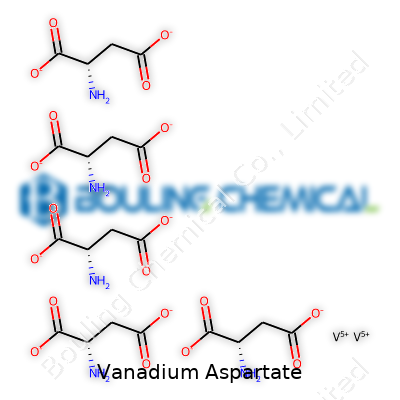
Vanadium Aspartate: A Deep Dive into Its Path, Properties, and Future
Historical Development
The story of vanadium aspartate tracks back to the late twentieth century, as chemists started to mesh organic and inorganic compounds with an eye toward fine-tuning trace mineral supplementation. Vanadium alone sits somewhere between biology and metallurgy, essential in some microorganisms and used in steel-hardening for industry. The idea of binding vanadium to an amino acid like aspartic acid grew from earlier efforts to craft mineral complexes that might help boost uptake or reduce side effects. In the biotech labs of the 1980s, scientists realized the aspartate ligand could help shuttle vanadium ions across cell membranes more predictably. Over the years, this compound started to pop up in research pipelines as both a supplement and a laboratory reagent.
Product Overview
Vanadium aspartate enters the market as a trace mineral supplement, mostly pitched at athletes, bodybuilders, and a handful of disease-focused research circles. Labs produce a pale-blue crystalline powder or solution, shipping out in tightly sealed containers because exposure to air and moisture risks clumping or degraded quality. Frequently, it appears in formulations alongside other chelated minerals. Some supplement brands push its purported insulin-mimetic effects; others use it for experimental work on cell cultures or animal models. For buyers, source and purity set the best products apart, with a handful of companies claiming pharmaceutical-grade manufacturing.
Physical & Chemical Properties
In hand, vanadium aspartate takes on a slightly blue to purple color from the vanadium ion at its core. This hue alone distinguishes it from other mineral chelates. It dissolves in water but breaks down in highly acidic or alkaline solutions. It smells faintly metallic if left exposed–a reminder of its mineral roots. Heating vanadium aspartate drives off water content, eventually leaving a sticky residue and then a brittle mass. With a molar mass hovering around 229-235 g/mol (depending on hydration), it's not especially dense, but users need to measure it with care. Mixing in multi-mineral blends calls for precise blending since even mild contamination with free vanadium pentoxide ramps up toxicity risk.
Technical Specifications & Labeling
Manufacturers work to guarantee both purity and trace element content. Certificates of analysis from third-party labs specify vanadium ion content, moisture levels, and heavy metal contamination. Labels show the vanadium amount–not just the compound weight–so users see actual dosing. Packaging reflects both scientific and regulatory pressure to keep batch details, expiry dates, and lot codes visible. Authorities in some regions limit daily intake by law, so compliance isn’t just about science–it means threading the needle of nutrition policy too.
Preparation Method
Commercial synthesis starts with sodium vanadate, a common salt, which reacts in water with aspartic acid at a carefully measured pH. Stirring and gentle heating coax the vanadium ion to exchange places and bind to the aspartate. After binding, filtration removes any unreacted material, followed by slow evaporation. What remains is further washed and recrystallized for purity. Sloppy work leaves behind sodium or unchelated vanadium, both of which muddy the product or raise toxicity alarms in later use. The quality of raw reagents, as always, affects the final result, so supply chain transparency counts here.
Chemical Reactions & Modifications
Vanadium aspartate doesn’t play nice with every chemical thrown at it. Strong acids can strip vanadium from the aspartic acid backbone, producing toxic vanadyl or vanadate ions. Reducing agents push vanadium to lower oxidation states, sometimes changing the color or solubility. Metal salt solutions, such as those containing calcium or magnesium, compete for ligands in mixed blends, risking precipitation. Researchers tinker with related chelates—swapping aspartic acid for glutamic acid, for instance–to see if tweaks in the backbone shift uptake or safety. Some studies use isotopically labeled vanadium to track its molecular journey in model organisms or cell lines.
Synonyms & Product Names
On labels, vanadium aspartate pops up under more than one name. Common synonyms include vanadyl aspartate, vanadium L-aspartate, and vanadate bis(aspartic acid) salt. Makers sometimes lean into fancy branding–AspaVan, VandaPlus, or even “ultra chelated vanadium.” Mislabeling plagues lower-quality imports, so confusion between vanadyl sulfate (entirely different) and vanadium aspartate persists. Casual shoppers, and a few distributors, mix these names, risking accidental double-dosing or missed research opportunities.
Safety & Operational Standards
Handling vanadium aspartate means taking real precautions. Inhaling the dust, absorbing it through the skin, or getting a dose into the eyes brings irritation and, at higher levels, toxicity. Facility workers wear gloves, masks, and often eye protection when moving bulk powder. SOPs call for spill kits near workstations. Finished goods must avoid cross-contamination with food or pharmaceutical products. Safety data sheets from major chemical suppliers warn of both acute symptoms–dizziness, nausea—and yet-unresolved longer-term effects. Regulatory agencies in Europe and North America cap daily vanadium exposure, with limits for food additives usually set lower than for supplements designed for research.
Application Area
Most of vanadium aspartate's use orbits nutritional supplementation, but applications widen each year. Sports nutrition retailers market it as a “muscle-volumizing” mineral, aiming at gym-goers searching for fractional boosts in glucose handling. Researchers in diabetes study it as a potential insulin-mimetic, as vanadium compounds sometimes increase glucose uptake in tissue models. Pharmaceutical developers track it as a bioavailable delivery method in animal testing for metabolic syndromes. Environmental studies sometimes call on it to test vanadium uptake or detoxification in plant and animal tissues. Rare corners of the electrochemistry world even entertain vanadium chelates for niche catalyst studies, although this use stays mostly experimental.
Research & Development
Research into vanadium aspartate moves between cell cultures, animal models, and a trickle of human trials. Scientists dig into whether chelating vanadium with aspartate reduces organ toxicity compared to inorganic salts. Key findings point to improved absorption, but worries linger about long-term accumulation. At least a dozen metabolic studies surface each year, mostly from basic science labs in the US, Europe, and East Asia. Some teams want broader applications, including delivery of other metal ions for disease models. R&D departments at supplement brands keep scouting cheaper synthesis routes and more stable formulations, sometimes trying to patent small tweaks on the original chelate design.
Toxicity Research
No one ignores the flip side: vanadium can be a double-edged sword. Toxicology studies in rodents show that high doses of vanadium aspartate impact kidney and liver function, with blood tests registering markers of oxidative stress. In human cell lines, concentrations far above dietary levels start to change gene expression linked to cell death. Repeated low doses over months, especially in animals with weaker detox pathways, lead to vanadium buildup. Safety studies published over the past decade suggest that using organic chelates like aspartate lowers but doesn’t erase the risk of vanadium’s more toxic forms taking hold in tissues. More long-term studies, especially in at-risk populations such as those with kidney disease, remain on the research wish list.
Future Prospects
Vanadium aspartate faces an uphill track in both nutrition and pharmaceutical spaces. If more data supports both benefits and safety over longer periods, regulators might green-light new uses in both diabetes and exercise medicine. Pharmaceutical chemists are exploring designer chelates that release vanadium at controlled rates inside cells, which could shift the risk for side effects. Synthetic biologists keep probing whether engineered microbes can tweak chelate profiles for new properties. Environmental health watchdogs want tougher traceability and transparency guarantees to control improper exposure, especially if wider use increases bioaccumulation in food chains. Whether vanadium aspartate grows into a backbone for metabolic or therapeutic innovations depends not on hype, but on what future research can prove about both benefit and harm.
What People Use It For
Vanadium aspartate shows up most often in the world of dietary supplements. Gym-goers and bodybuilders talk about it because it’s said to help blood sugar go where it belongs. The supplement usually lands on health food shelves next to other trace minerals and gets lumped in with formulas meant to “support metabolism.” That’s a pretty big promise for a trace mineral that hasn’t gotten much attention from mainstream medicine.
Why Some Believe It Matters
I’ve watched supplement trends come and go. Vanadium aspartate rides the same wave as chromium—hoping to help folks deal with insulin and glucose, especially those concerned about diabetes. Some studies hint that vanadium can play a small role in regulating blood sugar and supporting healthy cells, but clinical proof hasn’t kept pace with marketing claims. Back in the ‘90s, researchers dug into vanadium’s impact on blood sugar in people with type 2 diabetes. Small benefits showed up, but not enough to call it a solution. Plus, nobody enjoys taking something without knowing the risks, and vanadium compounds can build up over time if folks take lots of it every day.
What the Science Says
Vanadium itself appears in tiny amounts in food—seafood, mushrooms, even some grains. Most people get all they need without supplements. The version paired with aspartate helps the body absorb it more easily, at least in theory. Little long-term research exists on what happens when you keep taking vanadium aspartate. For now, the medical community agrees we just don’t have enough proof that popping vanadium will make a dramatic change for diabetes, bodybuilding, or athletic performance.
On top of that, vanadium supplements barely register on doctors’ lists of recommended minerals. The human body seems to function just fine as long as folks eat a variety of foods. Too much vanadium hasn’t shown benefits, but side effects—like stomach issues, greenish tongue, or even possible kidney problems—do show up when people take lots of it for a long stretch.
Safety Can’t Play Catch-Up
I’ve seen people order supplements from all over the internet, believing a pill could replace lifestyle changes. We don’t get away with that for long. The supplement world doesn’t hold itself to the same rules as prescription drugs. Testing isn’t as strict, so sometimes bottles have way more or less vanadium than the label claims. This leaves the door open for folks to ingest more vanadium than they think.
Better Ways to Help Blood Sugar
Doctors push for basic changes—eating more whole foods, staying active, and getting regular checkups. None of these sound as exciting as a brand-new supplement, but these approaches have decades of real results. For people already wrestling with diabetes or blood sugar swings, it helps to work with health professionals. Relying on trace minerals without proper guidance usually leads to disappointment or even harm.
The Takeaway from Experience
Spotting vanadium aspartate in health shops sparks curiosity. It’s tempting to think a mineral could fix big health problems. Over years of writing about wellness and reading research, it’s clear the most reliable way to manage blood sugar and keep energy up comes from old-fashioned daily habits. Supplements still can’t beat the basics any time soon—especially when the science hasn’t caught up to the hype.
The Spark Behind Vanadium Aspartate
Some folks scan the supplement aisle for the latest power booster, others pause when they see names like "Vanadium Aspartate." It sounds almost sci-fi, but vanadium is a trace mineral tucked away in foods like mushrooms, black pepper, and even shellfish. Pair it with aspartic acid, and you end up with a supplement that sparks questions: Why take it, and what can it do for your body?
What Vanadium Aspartate Can Bring to the Table
My earliest introduction to supplements came from a gym buddy chasing muscle gains. He swore by Vanadium Aspartate for metabolic support, and it’s not just gym chatter. Research points to vanadium’s insulin-mimicking nature, especially for folks watching their blood sugar. Some clinical studies find it helps people with type 2 diabetes manage glucose levels, though nobody should ditch prescribed medication in favor of pills from a bottle.
The interest doesn’t stop at blood sugar. Vanadium may play a role in cholesterol balance and bone development. I’ve seen nutritionists mention trace minerals as quiet workhorses in healthy bones and connective tissue. Real food gives small doses, but supplements can add more, especially if someone’s diet falls short.
Potential Side Effects and Smart Caution
Taking vanadium isn’t risk-free. High doses might bother your stomach or, if used recklessly, harm your kidneys. Most evidence ties benefits to moderate, short-term supplementation. I remember a local trainer telling his clients to approach minerals with the same respect as prescription drugs. Too much of any one element, including vanadium, throws off a delicate mineral and vitamin balance in the body.
Anyone with chronic conditions or on medication needs a conversation with their doctor before adding new supplements. Self-experimenting with your health is rarely a safe bet, and I say that after watching friends deal with supplement side effects. Good intentions need good information.
Why Purity and Sourcing Matter
Supplements aren’t all made equal. Vanadium Aspartate can come from suppliers with strict quality checks, or from companies skirting corners. Years ago in my fitness circle, we shared horror stories of tainted or mislabeled supplements—nobody should play Russian roulette with their health. Lab certifications, transparent labeling, and third-party testing aren’t just buzzwords; they’re bare minimums for trust.
Thinking About Solutions and Better Choices
Diet plays a big role in tracing minerals like vanadium naturally. Legumes, root veggies, and whole grains quietly bring vanadium to the plate. Instead of hunting for magic pills, focusing on a colorful, whole-food diet fills in many nutritional gaps. During times when supplementation feels right, sticking to evidence-based doses goes a long way.
Education and transparency from supplement brands would help people make safer choices. Instead of leaning on rumors or anecdotes, more public awareness and access to independent research cuts down the guesswork. Quality supplements, paired with professional guidance and realistic goals, often serve folks better than chasing hype or extreme doses.
Vanadium Aspartate carries potential, mostly in specific situations like blood sugar concerns. Still, respect for body chemistry and solid information always wins over blind leaps. Before reaching for a bottle, it pays to ask tough questions about why, how much, and in what context a supplement fits real health needs.
Understanding Why People Turn to Vanadium Aspartate
Many fitness enthusiasts and athletes look for any edge they can get, hoping to boost their performance or better manage blood sugar levels. Vanadium aspartate often pops up in supplement circles. Some believe it helps with insulin sensitivity or acts as a mineral boost. Researchers have looked at vanadium in different forms since the ’90s. Still, when it comes to adding something unfamiliar to the body, knowing the real risks matters as much as the potential rewards.
What Science Says About Side Effects
Vanadium isn’t just a lab curiosity. It’s a trace mineral, found in food, that the body uses in tiny amounts. At higher doses, vanadium aspartate walks a thin line. Side effects start popping up at levels far above what you’d get from a balanced diet. Research published in journals like Toxicology and Applied Pharmacology highlights that taking too much vanadium disrupts red blood cells and irritates the stomach – think diarrhea, cramps, nausea, and even a greenish tongue, which sounds odd but heads up, it happens. Long-term, high-dose supplementation turns more serious: organ damage, lowered white blood cell count, and impacts on mood or cognition. A major study from the Journal of Clinical Pharmacology reported that participants receiving high vanadium doses for several weeks saw changes in kidney and liver function tests – not good news.
Who Faces More Risk?
People with preexisting kidney disease or blood disorders face much more risk with vanadium aspartate. Their bodies already process waste and minerals differently. Folks with diabetes have also tried vanadium-based supplements, thinking it will help with blood sugar, but the American Diabetes Association flags possible toxicity and strongly suggests working closely with a healthcare provider instead of going solo. Children, pregnant women, and seniors should not use vanadium supplements except under strict medical guidance. Kids process minerals differently, and age brings its own set of vulnerabilities, so risk stacks up fast.
Why Real Experience Matters
Supplements get advertised all over the place, sometimes with exaggerated claims. Personal experience says most folks looking for a health boost skip reading about side effects until someone has a bad reaction. In my own community, several people tried “stacking” various sports supplements, vanadium aspartate included, and saw no real gains but found themselves facing nasty stomach troubles for weeks. Doctors in those cases stressed that nothing beats blood work and open conversations with professionals before jumping in.
Smart Ways to Avoid Trouble
Safe supplement use comes down to transparency and source checking. Reliable labels, third-party testing, and informed dosing play a big role. The Food and Drug Administration warns that dietary supplements can carry unpredictable risks, especially with trace minerals like vanadium. Companies sometimes skip proper testing or inflate health claims, so trusting everything on the front of a bottle leads to disappointment or worse, a trip to urgent care. Anyone thinking about vanadium aspartate should ask a doctor to review their health history and medications.
Better Habits and Alternatives
For most, the right diet delivers all the vanadium anyone needs. Legumes, shellfish, and whole grains each contain trace amounts, easily meeting the body's requirements without tipping into the danger zone. Focusing on regular meals—high in fiber, minerals, and real protein—usually beats out any promise stuffed in a supplement capsule. Science hasn’t shown a major benefit from vanadium aspartate that outweighs the risks, based on decades of peer-reviewed studies. Looking at those facts, careful choices and honest conversations go a long way.
Looking at Vanadium Aspartate Use
You can find vanadium aspartate in some bodybuilding supplements and a few niche mineral blends marketed to people wanting better blood sugar control. Fans of these products sometimes claim all sorts of things—from improved insulin sensitivity to a boost in energy. But does science really back this up? And how much vanadium aspartate really counts as the “right amount” for daily use?
Fact-Checking Health Claims
Vanadium is a trace mineral naturally present in soil, water, and some foods. Most people get trace amounts just by eating grains or shellfish. Nobody’s short on vanadium unless they’re in a research study with an ultra-restricted diet. Some supplement makers like to promote vanadium aspartate to bodybuilders and people with diabetes, pointing out old animal studies that suggested it could mimic insulin.
Human trials with vanadium compounds did see some improvement in blood sugar—mostly at high doses, and in people with diabetes, not the average person. The doses used in those studies? Usually 100 mg to 300 mg of vanadyl sulfate, which translates to around 20 mg to 60 mg of elemental vanadium. Most supplements have far smaller amounts, often under 5 mg per capsule.
Recommended Dosage: What’s Safe, What’s Not
The National Institutes of Health recognizes vanadium as a trace mineral, but doesn’t list a recommended dietary allowance. They mention an “adequate intake” of around 10 micrograms per day, which is hundreds of times less than found in most supplements. There’s no evidence that the body benefits from higher intake.
Studies using doses upwards of 1.8 mg to 5 mg elemental vanadium per day—sometimes up to 50 mg—have reported mild side effects like diarrhea, stomach cramps, or a green tongue. Doses above 10 mg a day start bumping into the range where kidney strain and other serious problems show up, especially with long-term use.
Most nutrition researchers and clinical experts recommend against supplementing vanadium without medical supervision. People with kidney disease, pregnant or breastfeeding women, and children should avoid it entirely due to the risk of toxicity and the lack of any proven benefit.
Regulation and Supplement Industry Practices
The dietary supplement industry in the United States isn’t tightly regulated. Labels might not always accurately show how much vanadium aspartate you’re actually getting per pill—or whether it’s pure or mixed with other questionable substances. There have even been cases where supplements contained wildly inconsistent vanadium levels compared to what was on the bottle.
The World Health Organization and the Institute of Medicine both acknowledge possible vanadium toxicity with high or prolonged intake. If a substance can cause harm in medium-to-high doses and hasn’t proven its benefit in well-designed human studies, responsible health professionals suggest steering clear.
Safer Choices and Smart Supplement Use
People sometimes look for easy answers in a bottle, especially for complex issues like blood sugar or building muscle. Food always offers safer minerals—the small trace amount of vanadium you need comes naturally from a varied diet. For anyone considering vanadium aspartate, a doctor or registered dietitian is the right person to ask.
As much as marketers like to make big promises, the science just isn’t there for vanadium aspartate as a supplement. Respect your kidneys, trust evidence, and stick to what’s proven—you’ll be healthier for it.
A Closer Look at Vanadium Aspartate and Health Concerns
Vanadium aspartate gets talked about often in bodybuilding and supplement circles. People believe it helps control blood sugar, boosts endurance, and promotes muscle growth. A lot of folks start with good intentions, chasing an edge. Many supplement companies position vanadium aspartate as safer than synthetic drugs, drawing from its trace presence in our diet and water. Eating mushrooms or shellfish, a person may take in a bit of vanadium, but probably never in concentrated pill form for months or years straight.
Not an Essential Nutrient, Not a Proven Wonder
The body doesn’t need much vanadium to function. The National Institutes of Health hasn’t established a minimum requirement for it; vanadium deficiency rarely shows up in real life. Some old studies hinted at improved insulin sensitivity, but most were done on animals or in lab dishes. Large, controlled human trials never materialized to show it reverses diabetes or sparks better muscle gains. The available research is thin and doesn’t tackle the long-term story.
The Risks Start Adding Up
Stepping beyond the brochures, the risk side weighs heavy. Early signs of vanadium overload include stomach upset, green tongue, or rashes. Longer exposure hits harder — think kidney strain, low white blood cell counts, and mood changes. People who worked around vanadium dust for decades sometimes developed lung problems and nervous system symptoms. These outcomes caught the eye of toxicologists, who have noted that vanadium accumulates in tissue over time. Supplements deliver far larger doses than food sources, which means no one really knows the ceiling before things go wrong.
People with kidney issues face higher risks. Anyone taking multiple supplements may push their intake up without even noticing. The Food and Drug Administration hasn’t approved vanadium aspartate for treating any disease, and most supplement bottles slide past regulation thanks to loose rules for dietary products. This puts the burden on the person buying – not on regulators or long-term research.
What Safer Approaches Can Look Like
Long-term health usually builds on solid basics. Balanced eating, regular movement, enough rest, and check-ins with a doctor can help manage blood sugar, build strength, and support energy levels. If someone still wants extra support, talking it over with a doctor or registered dietitian brings reality and objectivity into the equation.
Before adding vanadium aspartate to any daily routine, a person can search for published studies in scientific journals — not just blog posts or flashy supplement ads. Looking up the ingredient on the National Institutes of Health supplement database or reading systematic reviews reveals much more than marketing claims. Blood tests taken regularly could pick up any hidden problems early if a doctor is tracking things. If new symptoms pop up after starting a supplement, that’s a cue to pause and consider other options.
Vanadium aspartate may still sound promising to some in the fitness world, but the science isn’t solid enough to put it in the long-term safe zone. Before reaching for new pills, stepping back and weighing up real needs against real risks always has value.