Selenocysteine: From Discovery to Future Promise
Historical Development
People once believed proteins only used the standard twenty amino acids, a club unbroken for decades. It started to shift during the 1970s, when researchers stumbled upon something that bucked the trend: Selenocysteine. Rather than behaving as a rare contaminant, Selenocysteine showed up in critical enzymes. Studies focused on selenoproteins, where the usual sulfur atom from cysteine swapped for selenium. This substitution changed function, not just composition. Scientists had to rethink genetic coding—a new mechanism, requiring a “stop codon” (UGA) to sneak selenocysteine into proteins. Over time, labs in Europe, the US, and Japan cracked the details, mapping the rare but essential addition. Much of this came through work on enzymes like glutathione peroxidase and thioredoxin reductase, both carrying selenocysteine at their heart. Now we recognize this amino acid in bacteria, mammals, and even some archaea—showing just how fundamental this selenium variant has been across evolution.
Product Overview
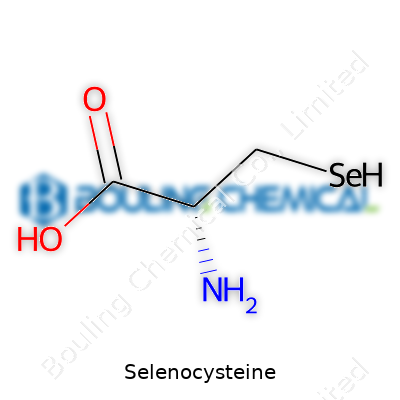
In pure form, Selenocysteine stands as the 21st proteinogenic amino acid. Structurally, it closely resembles cysteine but with selenium replacing sulfur. Researchers and companies typically offer it as powders or crystalline substances, sometimes packaged in solutions tailored for cell work. This amino acid turns up in basic biochemistry sets, nutritional research, and studies of oxidation and reduction in living organisms. While nobody takes selenocysteine as a supplement on its own, its presence in dietary selenium points to its nutritional importance. The significance stretches to medical and food labs, where researchers focus on its biological and catalytic potential. Knowing exactly what you’re working with matters in both research and downstream healthcare products.
Physical & Chemical Properties
Holding selenocysteine in hand, one finds a white to off-white crystalline powder, often with a faint odor that reminds some of garlic—a giveaway that selenium’s involved. The molecular formula C3H7NO2Se sets it apart from its sulfur cousin. It weighs in at about 168 g/mol. Selenocysteine dissolves in water, and the pKa of the selenol group sits much lower than the thiol group in cysteine. That means it ionizes more easily, making it much more reactive, especially in biological redox systems. Heat and exposure to air can trigger its breakdown, due in part to selenium’s sensitivity. Unlike many other amino acids, it can form selenenylsulfide or diselenide bonds much faster than ordinary sulfur-containing groups. This high reactivity is the key to its enzymatic magic, but also demands extra caution when handling pure compounds.
Technical Specifications & Labeling
Purity standards shape the product as much as chemistry does. Most lab-grade selenocysteine appears at upwards of 98% purity, with lower thresholds useful for routine biochemistry but inadequate for pharmaceutical research. Labels must declare the selenium content, method of analysis, hazardous handling codes, and storage advice—often under inert gases or refrigerated conditions to slow breakdown. Those buying bulk material usually look for source verification, batch records, and certificates of analysis, ensuring both research reproducibility and regulatory compliance. In the supply chain, careful tracking of shelf life and light or air exposure keeps stock from becoming inactive or hazardous to use. The right label isn’t just a piece of paper—it’s a handshake agreement on safety and traceability.
Preparation Method
Synthetic methods offer a reliable way to get selenocysteine. The classic approach couples serine or cysteine with a selenium source, often using selenourea or elemental selenium. Skilled chemists rely on stepwise protection and deprotection, sometimes deploying solid-support strategies to keep side reactions in check. Another avenue involves bioengineering, coaxing bacteria or yeast to insert selenocysteine into peptides using tricked-out genetic codes. Each route demands tight control of temperature, pH, and selenium atmosphere, since impurities or oxidative degradation can spoil yields. In academic work, most prefer solution-phase synthesis for scale and ease, but those scaling up for industrial use may turn to bioproduction systems. Downstream, purification uses chromatography, often on cation-exchange columns, stripping out impurities and by-products. No matter the chosen method, every batch requires rigorous quality testing—detecting tiny selenium contaminants that could alter biological outcomes or cause toxic effects.
Chemical Reactions & Modifications
This amino acid reacts with oxidants, alkylating agents, and metals with an eagerness unmatched by most other side-chains. In proteins, the selenol (-SeH) group acts as a stronger nucleophile than a thiol, making it uniquely capable of catalyzing key redox changes. Scientists exploit these features to label selenocysteine-bearing proteins, introduce spin labels for spectroscopy, or trigger cross-links for stability studies. Reactions with peroxides and disulfides happen at a rapid clip, producing selenenic acids or selenenylsulfide bridges that alter protein function dramatically. On the synthetic side, modifications often start with activating the selenol group, sometimes through acylation or alkylation, or via oxidative coupling to produce cyclic derivatives. Handling these reactions always involves extra caution, since selenium compounds can drift toward toxic by-products if conditions go off-script.
Synonyms & Product Names
Selenocysteine travels through the scientific literature under several guises. It shows up as “Sec,” the standard abbreviation, or as “Se-Cys,” “selenium analog of cysteine,” and “21st amino acid.” Chemical suppliers list it under its IUPAC name, 2-amino-3-selenolpropanoic acid, or simply as L-selenocysteine. Keep an eye out for names like “selenocystine” in older papers—this refers to the oxidized, dimeric form, which behaves differently in both chemistry and biology. In regulatory or pharmacological talks, selenocysteine may turn up as part of selenoproteins or selenized peptides, so the name depends on who’s doing the labeling and what regulatory body governs the application.
Safety & Operational Standards
Selenocysteine doesn’t rank as the most dangerous chemical in the lab, but its selenium core means it can slip into toxic territory with the wrong handling. Prolonged exposure—especially inhalation of dust or ingestion—leads to effects like selenosis, which brings fatigue, nervous system issues, lung irritation, and a garlic-like breath. Labs require proper fume hoods, gloves, goggles, and training before anyone uncaps a bottle. Waste gets collected in sealed, clearly-labeled containers for hazardous waste disposal. Most institutions set storage at low temperatures, away from light, oxygen, and acids that could trigger unwanted reactions. Regular training ensures researchers stay sharp about potential risks. Emergency protocols for spills, accidental ingestion, or exposure build redundancy into safety practices. Regulatory frameworks in the US, EU, and Asia set hard limits for occupational exposure, reminding everyone that even trace amounts add up over time.
Application Area
The real power of selenocysteine lies in biology and medicine. Scientists study how selenoproteins protect cells from oxidative damage and balance thyroid hormone metabolism. Glutathione peroxidase, a classic example, relies on selenocysteine to neutralize dangerous peroxides. Medical researchers probe links between selenium status, chronic diseases, and even some cancers—searching for new clues to prevention or therapy. Nutritional research investigates dietary selenium, examining how the body absorbs, distributes, and integrates it into proteins via selenocysteine. Some labs explore new diagnostic tests or therapies, including antioxidant supplements and peptide drugs, where selenocysteine toggles cell responses. Biotechnology outfits engineer microbes to produce selenoproteins with unique catalytic powers. Applied chemistry teams exploit selenocysteine as a probe for protein folding, structural studies, and even drug design, thanks to its distinct electron and spectroscopic signatures. Its versatility stretches from environmental science—tracking selenium pollution—to nanotechnology, where new materials mimic selenoproteins or exploit selenocysteine for surface chemistry.
Research & Development
Ongoing research sharpens the focus on how selenocysteine adapts across life forms and disease states. Many groups dive deep into the genetic machinery, exploring how transfer RNA, enzyme cofactors, and specialized mRNA elements conspire to install selenocysteine only where cells need its special abilities. Advances in synthetic biology allow production of selenoproteins in large quantities from engineered bacteria or yeast, opening new doors for therapeutics or diagnostic reagents. R&D in pharmaceutical labs targets selenocysteine for drug candidates exploiting its redox chemistry, searching for treatments in oxidative stress, cancer, and metabolic disorders. Some teams look for new ways to craft selenocysteine analogs, tuning parameters like stability, reactivity, or binding specificity. Other arms of research focus on agricultural improvement, examining how biofortification through selenocysteine-boosted crops can improve nutritional value while avoiding environmental contamination. The competitive push to turn selenocysteine from a scientific curiosity into a foundational tool keeps attracting grants, collaboration networks, and private investment.
Toxicity Research
Understanding Selenocysteine’s toxicity means facing the paradox of selenium itself—essential at trace levels, dangerous in excess. Studies in rodents, cell lines, and human epidemiology show a fine line between benefit and harm. Chronic high exposure triggers selenosis, hurting nerves, kidneys, and the GI tract. Acute overdose brings on nitrate-like poisoning symptoms, making dose control critically important. Researchers tune in not just to the dose but also to selenium form—pure selenocysteine gets absorbed and distributed differently than inorganic selenium salts. Animal studies dig into how long-term exposure, gender, and genetics alter risk profiles. Regulatory agencies set dietary tolerances, occupational exposure limits, and guidelines for supplements, all with Selenocysteine’s rapid reactivity in mind. Toxicological research helps design better safety protocols for labs, factories, and environmental cleanup—reminding users to respect both the element’s promise and its dangers.
Future Prospects
The coming years offer rich potential for selenocysteine in precision medicine, smart nutrition, and industrial biotechnology. Genetic engineering may allow precise delivery of selenocysteine-bearing proteins, custom-tuned for individual health or disease needs. Agriculture could adopt crops that leverage selenocysteine for antioxidant power, helping combat nutrient deficiencies in vulnerable populations. In nanotechnology, selenocysteine’s unique chemistry may inspire catalysts and new materials for green chemistry applications. Drug researchers look to this amino acid for targeted therapies—honing in on cancer cells or rebuilding damaged metabolic pathways. Regulations will evolve as the compound moves from bench to real-world products, putting strong quality, safety, and environmental checks in place. Awareness of selenium’s double-edged nature drives continued research on metabolic pathways, risk factors, and antidotes. Those working at the intersection of biology and chemistry find Selenocysteine both a challenge and an opportunity—one that promises new science and new solutions in health, industry, and beyond.
Looking Beyond the Basics
Ask about essential nutrients and most people bring up vitamins or iron. Few mention selenocysteine, even though it stands out as a unique amino acid that our bodies use to build a range of important proteins. Referred to as the “21st amino acid,” selenocysteine shows up in the human body less frequently than others but plays a powerful role in keeping us healthy.
What Makes Selenocysteine Different?
Selenocysteine is often compared to cysteine, another amino acid, but in selenocysteine selenium takes the place of the sulfur atom. That swap lets selenocysteine act as a building block for selenoproteins—molecules behind a range of vital chemical reactions in the body. These selenoproteins support everything from metabolism to the immune response. The catch is, humans can’t store up selenium very well. Selenocysteine must come from your diet and get used efficiently, or it won’t stick around to help.
Health Benefits Backed by Science
I used to think antioxidants lived only in blueberries or green tea, but selenoproteins prove otherwise. They protect cells by helping sweep up free radicals—a process crucial in countering damage from pollution, sunlight, or plain old aging. A group of enzymes called glutathione peroxidases use selenocysteine to neutralize these harmful molecules before they cause trouble, which means more resilience against illness and slower aging.
Selenocysteine also appears in enzymes tied to thyroid function. The thyroid makes hormones that guide energy use, body temperature, even mood. If your body misses out on selenocysteine, thyroid hormones stumble. I saw this firsthand with a relative whose sluggish thyroid perked up with better selenium intake, as her doctor recommended foods like Brazil nuts, eggs, and fish.
Several studies show that countries with selenium-rich soil and diets see lower rates of certain diseases, from thyroid disorders to some cancers. That’s not about magic, just biochemistry. Without selenocysteine in the mix, DNA repair slows down, immune defenses lag, and cells become more vulnerable to damage and mutations.
How to Get Enough—Without Overdoing It
Selenium finds its way into the food chain mostly through plants, which absorb it from the soil. Seafood, meats, and some nuts end up with higher selenium content. Eating a small handful of Brazil nuts once or twice a week covers selenium needs for most adults. On the other hand, popping high-dose supplements won’t boost health and can even cause toxicity—hair loss, brittle nails, and digestive problems in extreme cases.
A lot of people ask whether supplements help. Most evidence supports getting selenium from whole foods unless a doctor prescribes otherwise. If local soil lacks selenium, regional diets might need extra attention. Lab tests for selenium levels can help spot deficiencies, especially for people with metabolic or digestive conditions that block nutrient absorption.
Investing in Dietary Diversity
Embracing dietary diversity often keeps nutrition on track. Selenocysteine works best as part of broader nutritional support, not alone. Instead of chasing a single nutrient, aiming for a diet rich in fish, eggs, seeds, and legumes ensures that selenocysteine—and many other health essentials—are covered.
Many people ignore minerals that fly under the radar, but selenocysteine shows that even trace nutrients matter. With a little knowledge and a few food choices, it’s possible to reach levels that help the body defend itself, repair, and thrive—without resorting to megadoses or drastic changes.
Selenocysteine at the Table: Not Your Everyday Pill
Stepping into the world of specialty supplements can feel like wandering into a health food store where the labels rarely give you the real story. Selenocysteine, sometimes dubbed the “21st amino acid,” pops up on the radar for its ties to antioxidants and cell health. Most folks get their selenium from routine meals: seafood, eggs, Brazil nuts, beef. Selenocysteine takes a detour from ordinary nutrition, showing up in research for possible benefits—usually involving the body’s machinery for fighting off oxidative stress and supporting the thyroid.
What Dosage Means in the Real World
The topic of how to dose selenocysteine lands quickly in the territory of caution. Selenium, the underlying mineral, gets measured in micrograms, not milligrams. Adults usually only need about 55 micrograms of selenium per day. Selenocysteine doesn’t appear in nature as a standalone supplement on supermarket shelves, and that’s for good reason. The body uses it as a building block in certain rare enzymes, but overwhelming the system could tip the scales toward toxicity—a mistake that can bring on symptoms like stomach troubles, hair loss, and even nerve issues.
The issue of “how much?” turns into “why at all?” Selenocysteine’s presence in supplements often traces back to efforts in research labs, not long-standing over-the-counter use. Pharmaceutical preparations of selenocysteine exist only for very specific medical needs, usually supplied under careful medical watch, such as for people on parenteral nutrition or with certain genetic disorders.
Why Simplicity Wins
Supplements with common selenium forms—like selenomethionine or sodium selenite—already offer an easier route for most people wanting to fill out their daily requirement. These forms also come with clear dosing guidelines. Nutrition experts and public health groups point out that, in most regions, soil and food already deliver enough selenium. Data from the World Health Organization highlights that populations showing deficiency face the greatest risk, which rarely includes North America and most of Europe.
Real stories about supplement overuse paint a troubling picture. One study in Environmental Health Perspectives described cases where accidental dietary selenium overconsumption led to symptoms from garlic breath to fatigue. Over-the-counter selenium pills caused some of these mishaps—showing mistakes often stem from misunderstanding serving sizes, not deficiency.
A Roadmap For Consumers
Anyone considering specialty selenium products like selenocysteine should have a real conversation with their doctor or a registered dietitian. Home lab testing kits seldom deliver reliable selenium measurements. A specialist checks blood selenium levels only if there’s real suspicion of deficiency or a metabolic condition that disrupts selenium handling.
Manufacturers sometimes market selenocysteine as a “next-level antioxidant.” The science sits on tricky ground, with far more real-world proof backing up adequate nutrition and using food as the central supply. National Institutes of Health maintains that both deficiency and excess can cause harm, so pushing up the dose without a tailored medical reason doesn’t make sense.
Choosing a path on selenocysteine means asking tougher questions about necessity, safety, and the true reason behind the supplement. Clear evidence supports balanced food sources; a trusted health professional can help decode if something extra might actually help, or if it just adds risk in a search for health that’s already in reach at the dinner table.
Unpacking Selenocysteine: Not Just Any Selenium Compound
People chatting about dietary supplements come across selenocysteine almost every time the topic turns to selenium. Selenocysteine stands out as a rare amino acid—often called the 21st amino acid—that the body uses to build proteins vital for metabolism and protection from oxidative damage. Unlike straightforward selenium salts or commercial pills, selenocysteine works inside cells, helping enzymes do tough clean-up work.
Possible Side Effects: Learning from Food, Supplements, and Research
Eating foods with selenium, like Brazil nuts, eggs, and tuna, never raised big alarms in my circles unless someone really went overboard. But with selenocysteine used in supplements or special diets, things start to change. Taking too much selenium brings real risks. The science shows that people probably don’t notice minor symptoms at first: a bit of stomach upset, some garlic breath, or metallic taste. Once selenium piles up, though, that can shift toward hair loss, brittle nails, or neurological symptoms such as tingling in the fingers and toes.
Growing up, I saw family members lean into multivitamins during cold season. Nobody thought much about trace elements. Yet, in areas where soil holds a lot of selenium, farmers sometimes notice cattle with cracked hooves or lethargy—clear reminders that more isn’t always better. The National Institutes of Health sets 400 micrograms per day as the upper safe limit for adults. Regularly taking more, even with “good intention,” can tip the scales into toxicity.
Digging into Real Risks: Not All Selenium Forms Are Created Equal
Lots of talk out there lumps all forms of selenium together. The body can handle food-bound selenium pretty well, breaking it down carefully. Selenocysteine from natural foods works as a building block and gets tucked into certain proteins during digestion and absorption. On the other hand, isolated selenocysteine or supplement forms may act differently if dosage sneaks above normal dietary levels, since the body absorbs them more directly.Some studies even suggest too much selenium compounds, especially from high-dose supplements, may bump up the risk of type 2 diabetes, skin rashes, or lower thyroid function. Selenium plays a crucial role in thyroid hormone production, but it’s a tightrope—too little or too much throws the system off balance. The “U-shaped curve” research keeps popping up: a little goes a long way, but pushing it invites trouble.
Facing the Dose Challenge: Real-World Suggestions
Doctors and nutritionists regularly say, “Get selenium from food,” and I’ve found that advice holds up. Most people eating varied meals get enough selenocysteine through meats, seafood, and grains—no complicated chemistry needed. If a person suspects a deficiency, bloodwork can offer answers before anyone reaches for a supplement bottle.
For those with health conditions requiring extra monitoring—like thyroid disease or people on restrictive diets—talking to a trusted medical provider beats guessing games. Over-the-counter products sometimes skip quality controls and overshoot labeled amounts. Choosing brands tested by third parties lowers the gamble. Transparency about testing, sourcing, and dosage shows a supplement company values safety as much as the buzzwords on the label.
Looking Forward: Educating, Not Spooking
Friends sometimes ask if reading about potential toxicity means ditching all supplements. Rarely does good nutrition come from fear. Selenocysteine keeps our cells running, but as with most nutrients, respecting the line between enough and too much matters most. Most people thrive on what’s already showing up on their dinner plates, not an extra capsule.
What is Selenocysteine?
Selenocysteine gets called the 21st amino acid, and for good reason. It’s tucked inside certain enzymes that help the body handle free radicals and keep thyroid hormones in balance. The way it works depends on getting the right amount of selenium from food—fish, eggs, and Brazil nuts are good bets. The body uses this trace mineral for critical tasks, but it's easy to forget that more isn’t always better, especially once supplements enter the picture.
Mixing Selenocysteine with Medications
People often assume that something from a natural source can’t possibly clash with prescription drugs. With selenocysteine, the stakes are higher than it seems at first glance. Because it goes hand in hand with selenium, it shares some of the same upsides and risks—including the risk of toxicity at higher doses.
Blood thinners, like warfarin, come up most often in conversations about interaction. Higher selenium levels can thin the blood further, sometimes tipping the scales toward increased bleeding risk. If you know anyone on anticoagulants, they’ve probably been told to keep their diet steady—and that’s not just about vitamin K. Selenium-rich foods and supplements, even if the label mentions selenocysteine, can shake up their balance.
Chemotherapy drugs such as cisplatin or some antibiotics, including certain fluoroquinolones, can also meet trouble. Selenium may sometimes protect cells from damage, but with strong drug regimens, it can throw off intended effects or trigger unexpected side reactions. Data from the National Institutes of Health and several peer-reviewed journals shows that over-supplementing selenium during cancer treatment isn’t risk-free.
Supplements and Other Nutrients
Many folks stack vitamins and minerals to “boost” health, tossing selenocysteine into the mix with vitamin E, vitamin C, or zinc. Layering these nutrients can make sense for antioxidant support, but large doses of one may block absorption or alter how another works. Taking high amounts of selenium for a long time lowers copper uptake and can even lead to nerve problems, stomach pain, or hair loss. These aren’t rare side effects—they match up with case reports in medical literature.
A real-life binder of interactions often hides in over-the-counter shelves. Multivitamins with separate selenium and zinc can lead to an unintentional stacking effect, raising blood selenium above a healthy threshold. Older adults, people with chronic health conditions, and anyone with kidney issues are especially at risk because their bodies may not clear out excess selenium efficiently.
Practical Steps and Professional Guidance
It helps to treat supplements as you would a prescription—track what you’re taking, ask your pharmacist for a second look, and be open with your healthcare provider. Doctors sometimes miss supplement interactions because patients don’t always mention what they buy off the shelf. Whether it’s selenocysteine or another ingredient, transparency makes for safer choices.
For anyone set on adding selenocysteine to their routine, lab tests can check current selenium status. Most people get enough from food, but if you do need a supplement, a tailored dose keeps things balanced. Reliable sources like the Mayo Clinic and Harvard Health both point to the same advice: more isn’t always better, and a conversation with a professional outperforms guessing every time.
Ignoring possible interactions comes with real-world consequences. Using what’s already known, and paying close attention to what goes into your body, lowers the risk of unexpected side effects or complications. Selenocysteine can help support health, but only with the right dose, at the right time, for the right person.
Understanding Selenocysteine in Supplements
Talk about selenium, and most people think of it as just a trace mineral. Selenocysteine, its active form, plays a crucial part in various enzymes that protect our cells from damage. Plenty of supplement makers have started adding selenocysteine to their products, pitching a range of supposed health benefits. Yet, this compound isn’t for everyone. Blindly trusting every new trend on the shelf lands some folks in trouble.
Selenocysteine: Not for Everyone
Chronic kidney disease changes how bodies process selenium. Damaged kidneys struggle to clear excess minerals, which can push selenium to levels that harm nerves or cause stomach upsets. If you live with lingering kidney issues, better to steer clear of selenocysteine products unless a doctor says otherwise.
Pregnant or breastfeeding women walk a tightrope with micronutrients. Too little selenium and the risk rises for thyroid or immune problems. Add too much, and the side effects pile up, including hair loss, digestive issues, or even harm to the baby. Experts at the NIH warn against crossing 400 micrograms daily from all sources. Most prenatal vitamins already meet safe limits, so tossing extra selenocysteine into the mix could backfire.
Potential Risks for People with Thyroid Disorders
Selenocysteine connects with the thyroid more than folks realize. Some thyroid problems, like Graves’ disease or Hashimoto’s, already push selenium metabolism out of whack. Extra selenocysteine from supplements might tip the balance in a bad way, leading to palpitations, anxiety, or more serious thyroid swings. People managing thyroid problems should always consult an endocrinologist before adding selenium-rich products.
Drug and Supplement Interactions
A lot of prescription drugs mess with selenium in the body. Cisplatin, used for cancer treatment, drops selenium faster than normal, leading some people to seek out supplements. But mixing high-dose selenocysteine with chemotherapy or blood thinners can interfere with these meds or lead to more bleeding. Warfarin users especially face higher chances for interactions when their selenium intake spikes.
Symptoms Spell a Problem
Too much selenium doesn’t always make trouble in obvious ways. Bad breath, fragile nails, dizziness, or mood swings may creep up after weeks of heavy use. If strange side effects crop up after starting a supplement that lists selenocysteine, it’s wise to stop and ask for medical advice.
Build Awareness Before Reaching for the Bottle
Education matters more than marketing buzz. Many assume more “essential” nutrients mean better health, but the body keeps a delicate balance. People with autoimmune, cancer, or kidney issues risk the most harm from trendy selenocysteine boosts. Reliable guidance comes from medical professionals, not online influencers or the person across the supplement aisle.
For those without specific deficiencies or medical advice, getting selenium from food—nuts, whole grains, eggs—covers most needs. The body recognizes and handles dietary selenium better than concentrated supplements. Sticking with food sources, checking in with a real healthcare provider, and reading up on the risks marks the safer path.