Molybdenum Trioxide: A Closer Look
Historical Development
Molybdenum trioxide has a history that reaches back to the late 18th century, when early chemists began exploring the unique metal ores coming out of mountainous European mines. Chemists like Carl Wilhelm Scheele and Peter Jacob Hjelm eventually isolated molybdenum, unlocking a path for the world to explore compounds with remarkable stability. It soon became clear that the trioxide form – MoO3 – could handle high temperatures and challenging environments far better than most oxides. With the rise of industrial chemistry during the 19th and 20th centuries, research expanded rapidly. Laboratories refined techniques to purify and manipulate this compound, making it standard for metallurgy and catalysis long before the digital age. Generational knowledge passed along in chemistry classes still recalls these developments, linking modern applications back to the miners and pioneers who first recognized molybdenum’s potential.
Product Overview
Molybdenum trioxide provides an essential starting point for both the chemical industry and material science. Its pale yellow crystalline powder is familiar in any seasoned chemist’s toolkit. I’ve seen this substance find a role as a precursor for producing pure molybdenum metal, shaped into wires or rods needed in electronics and specialty steel. Commercially, it appears in several product grades, from high-purity variants tailored for electronics to general grades aimed at pigment and catalyst markets. Every ton sold supports industries as diverse as ceramic glazes, lubricants, and crop fertilizers. Companies use a variety of trade names – molybdic anhydride, molybdenum(VI) oxide – and their catalogs often list specific forms like fine powders or larger, flocky crystals for different settings.
Physical & Chemical Properties
MoO3 delivers a striking balance of properties that chemical engineers and lab workers count on. Its melting point soars around 795 °C and it boils above 1,150 °C, making it dependable even in difficult manufacturing environments. Its density sits near 4.7 g/cm3 – not so dense as other metals, but sufficiently robust for demanding tasks. Poorly soluble in water, it offers much higher solubility in alkaline solutions, thanks to its amphoteric nature. Chemists value this duality, using it to create soluble molybdate ions for specialty catalysts and pigment work. These features, paired with its oxidative strength and thermal stability, make it attractive for scientific exploration and everyday industry.
Technical Specifications & Labeling
Nearly every container of molybdenum trioxide carries strict labeling aligned with global standards. Walk through any chemical warehouse and you’ll spot drums labeled with CAS number 1313-27-5, purity measurement (often 99.5% and above for electronics), and health hazard pictograms. Material safety data, mandated by local and international regulations, detail everything from recommended storage conditions (dry, cool, well-ventilated) to shelf-life and safe disposal guidelines. Shipment relies on compliance with UN transport codes, particularly for larger industrial quantities. Big buyers, like steelmakers and catalyst producers, demand certificates of analysis tracking trace impurities down to parts per million, seeking assurance that each batch meets contract guarantees. This ensures downstream processes run smoothly, without the risk of unwanted contamination.
Preparation Method
Industrial production of molybdenum trioxide rarely stands still. Refineries extract it mainly from molybdenite concentrates – the naturally occurring molybdenum disulfide. The familiar roasting process involves passing air over powdered molybdenite in large rotary kilns, letting oxygen react at temperatures above 600 °C. This step burns off sulfur as SO2, leaving the desired oxide. For higher purity demands, producers may deploy sublimation, heating MoO3 until it vaporizes then collecting the cooled product in chambers far from contaminants. Both methods use rigorous dust control to protect workers and the environment. Years ago I visited a pilot plant in the American West and saw stacks venting waste gases through massive scrubbers – a necessary step as environmental regulations toughened and community awareness grew.
Chemical Reactions & Modifications
Molybdenum trioxide enters thousands of chemical reactions. Its chief trick lies in shifting between oxidation states with remarkable ease. Spill MoO3 into hot alkali and you get soluble molybdate salts, essential for corrosion inhibitors and catalysis. Mix with reducing agents like hydrogen at high temperature and you reclaim metallic molybdenum, a basic step in crafting tough steel alloys. Add organic reagents or other metal oxides and chemists shape hybrid catalysts, fine-tuning performance for fuel desulfurization or specialty polymer production. In labs, students experiment with partial reduction to MoO2, or even play with layered structures for battery research. Newer research teams layer the trioxide onto substrates, studying electronic and optical properties that could reshape sensors and memory devices.
Synonyms & Product Names
Look through inventory systems and you’ll find molybdenum trioxide tagged with a range of names. Chemists often call it molybdic oxide or simply “moly orange” in shorthand. Some product lines use systematic names like dioxomolybdenum or molybdenum(VI) oxide. International labels, especially in older European factories, may list molybdäntrioxid or ossido di molibdeno. Marketing sometimes repackages it for end-use customers, pitching it as a ceramic flux, catalyst base, or pigment additive. This patchwork of terms sometimes causes confusion for newcomers, a reminder that industrial chemicals often carry a history as rich as their science.
Safety & Operational Standards
Anyone who has handled MoO3 knows it deserves respect. Inhaled dust irritates the respiratory tract, and chronic exposure can affect lungs or even kidneys over time. Most modern workspaces outfit plant staff with respirators, gloves, and protective eyewear, relying on local exhaust ventilation where dust occurs. Emergency eye wash stations and showers appear in almost every workspace involved with large quantities. Global agencies set occupational exposure limits, with OSHA and ACGIH in the US, and REACH rules in Europe, dictating maximum airborne concentrations and worker monitoring requirements. Training programs run annually in most well-run plants. Safe handling procedures get drilled into all staff on day one, and companies must document incidents for regulators. In remote mining areas where oversight sometimes lags, grassroots health campaigns and NGO support have filled critical gaps, spreading awareness that often saves lives.
Application Area
The reach of molybdenum trioxide is bigger than most people realize. Its largest market belongs to alloy production, where it transforms the hardness, corrosion resistance, and toughness of steels used in bridges, drilling tools, and jet engines. Beyond metallurgy, the pigment industry uses it to produce vibrant yellow and blue shades, especially in ceramics and dyes that resist fading in sun and rain. Producers of petroleum fuels depend on MoO3 in hydrotreating catalysts, stripping sulfur from fuels to meet global emissions targets. Researchers press it into service for electrochromic devices, gas sensors, and even as an electrode material in experimental batteries and solar cells. The agricultural sector leans on its water-soluble salts to correct molybdenum deficiencies in crops, boosting yields in tough soils. In my own teaching days, I used to show students the vivid colors MoO3-based pigments can deliver in glazes and paints, convincing even the most skeptical that heavy industry and art can intersect.
Research & Development
Interest in molybdenum trioxide drives new ideas across several disciplines. Materials scientists focus on adapting thin films or nanostructured forms with finely adjusted particle sizes, searching for breakthroughs in energy storage and sensors. Recent years brought a surge in the use of MoO3 flakes and nanosheets for flexible electronics, promising cheaper and less wasteful manufacturing. Chemists push to craft more selective catalysts for pollution control, aiming for processes that yield less toxic byproducts and limit energy consumption. Environmentalists want to recover and recycle molybdenum from used catalysts, closing industrial loops and reducing mining impacts. Some academic groups explore combining MoO3 with two-dimensional materials, targeting advances in transparent electronics or next-gen transistors. This flood of research owes much to collaboration between universities, government agencies, and startups eager to bring laboratory ideas to scale projects capable of changing entire sectors.
Toxicity Research
The health impact of molybdenum trioxide attracts regular scrutiny. Animal studies highlight that, while molybdenum itself is an essential trace element, high exposures to its trioxide can disrupt biological systems, especially if dust levels rise. Chronic inhalation in workers has been linked to respiratory symptoms, and certain settings require strict air quality monitoring. Ecotoxicology surveys show that, if released into streams or soil, high-concentration MoO3 imposes toxic effects on aquatic organisms or plants over time, heightening calls for improved containment. Companies invest in advanced filter systems and sealed handling equipment to keep exposures well below recommended thresholds. Longitudinal studies now follow groups of metal workers and miners, tracking any effects that may arise decades after occupational contact. This evidence-based review helps shape current safety rules while informing future research on tracking exposure biomarkers or using replacement materials where feasible.
Future Prospects
The future of molybdenum trioxide looks brighter than ever. Demand for stronger, lighter alloys grows alongside renewable energy sectors, where wind turbines and electric vehicles depend on durable, high-performance parts. Emerging battery and supercapacitor designs call for MoO3-based materials that charge quickly without losing capacity. As sustainability reshapes mining and chemical processing, recycling older catalysts and smarter extraction methods stand poised to cut environmental impacts while keeping supply secure. Shifts in global manufacturing may move some production closer to users, boosting economic resilience. Cutting-edge research fields – including smart coatings, transparent displays, and advanced sensors – see the trioxide as a key ingredient in tomorrow’s innovations. This path, built over centuries, stands as proof that even established chemistries keep delivering new solutions in an unpredictable world.
The Backbone of Steel Strength
Ask anybody in steel manufacturing, and they’ll tell you how crucial additives are. Tossing in just a bit of molybdenum trioxide during production changes everything. This stuff doesn’t work alone—it’s a popular ally for turning plain steel into something that handles heat and stress without losing its edge. Factories use it to beef up pipes, tools, and machine parts. If you’ve ever worked with equipment that needs to handle high pressure and avoid rusting out, odds are good that molybdenum trioxide played a quiet role behind the scenes. According to the U.S. Geological Survey, over 90% of molybdenum ends up in steel and superalloy production. Without it, bridges and skyscrapers wouldn’t hold up against the elements for nearly as long.
Keeping Catalysts in Motion
Refineries need more than just heat and pressure—they need a way to pull sulfur out of oil and gas. Here, molybdenum trioxide steps into the spotlight. It teams up with other chemicals to clean fuels we count on every day. I’ve seen the difference myself at longtime refineries: Using catalyst mixtures that include molybdenum keeps the process running smoother and keeps emissions down. This matters when cities want cleaner skies and tougher air-quality rules. China National Petroleum Corporation’s data shows molybdenum-based catalysts have helped knock sulfur levels down by over 60% in some major refineries. That means fuels burn cleaner in cars and buses worldwide.
Ceramics and Pigments With Staying Power
If you’ve ever painted pottery or noticed the rich blues and greens in certain glass, molybdenum trioxide probably played a part. Artisans and factories mix it into ceramic glazes and glass batches to get those deep, long-lasting colors. This works for more than just art—television and computer screens, solar panels, and even architectural glass draw on its unique properties. It doesn’t just add color; it also helps glass resist heat. From my own hobbyist efforts in stained glass, I’ve learned molybdenum compounds don’t just boost color—the finished glass holds up better under sunlight and temperature swings.
Stepping Into the Battery World
The push for batteries that hold more power charges right through molybdenum chemistry. Lithium-ion and next-generation battery researchers have been blending in molybdenum trioxide for its ability to help move ions quickly without breaking down. Lab experiments at the University of California have shown improved cycle life and charging speed when they add it to battery electrodes. Anyone who’s tried to squeeze more life out of a smartphone can appreciate the difference this sort of tweak makes.
Beyond the Factory Floor
Using molybdenum trioxide responsibly means tracking supply chains and staying alert to environmental rules. Mining and refining can leave a footprint, as with most metals. Producers who adopt closed-loop systems and cleaner roasters help keep groundwater safe and air healthier. We’re seeing more Western and Chinese companies publishing impact reports and tweaking processes to use less water and energy. Practical changes like these protect workers and nearby towns. If more manufacturers focus on cleaner sourcing and recycling, the benefits of molybdenum trioxide can stretch even further—without leaving the planet worse off.
What Is Molybdenum Trioxide?
Molybdenum trioxide pops up in plenty of industries. Steelmakers and ceramic glazers use it all the time. Batteries, electronics, even pigments on your kitchen mugs might owe some of their performance to this chemical. The dust and fumes come with a sharp warning label, though—and that's not just for show.
The Facts: Health Risks and Scientific Evidence
The real questions start when powder turns airborne. Every chemical feels fine until someone inhales, swallows, or gets it on their skin. The American Conference of Governmental Industrial Hygienists lists molybdenum trioxide as a workplace risk due to its toxicity profile. Breathing the dust can irritate the nose and throat, causing coughing and sneezing. Eyes and skin don’t appreciate contact, either—rashes and soreness aren’t rare for folks handling it without proper gear.
Long-term exposure tells a bigger story. High levels in the air can mess with the lungs, leading to respiratory issues in factory workers or lab technicians who skip protection. Studies show some risk of kidney problems or changes in the blood if exposure gets out of hand. Rats exposed to air thick with the stuff faced increased lung tumors, leading the International Agency for Research on Cancer to call molybdenum trioxide a possible human carcinogen. That’s not a detail I’d ignore if I spent hours around the stuff.
Real Workplace Experiences
Back in college, I spent a summer cleaning out a dusty warehouse where old chemical drums sat unsupervised for years. A distant memory, but the lesson stuck. Nobody took dust masks seriously until we started coughing, then scrambled for whatever we could find. Then and now, it’s the underestimated risks that catch up—especially for people packing or grinding materials every day. The white powder floating in the air seemed harmless, but it left my eyes watering and skin itching after hours of exposure.
I later read up on it: short stints bring irritation, but repetitive, unprotected contact can break down the body’s natural defenses.
Regulatory Oversight and Limits
The Occupational Safety and Health Administration does not treat molybdenum trioxide as just another dust. OSHA sets strict limits on how much workers can face during an eight-hour shift. The National Institute for Occupational Safety and Health has similar exposure thresholds—both for dust and fumes. Companies ignoring these don’t just gamble with fines. They risk real, crippling health effects for their workers.
Reducing Risk: Steps for Safer Handling
Safe handling starts with knowledge and continues with discipline. Gloves, sturdy goggles, and N95 masks should be routine for anyone working near open barrels or piles of powder. Good ventilation systems pull dust out of the air. Simple cleaning habits—like wiping down workspaces and washing hands—pay off in fewer doctor visits and less sick leave. Training sessions need real-life stories and zero sugar-coating, especially for new hires.
Any company storing or using molybdenum trioxide should run regular air checks and maintain clear labels and up-to-date Material Safety Data Sheets. Small investments here save a world of regret later on.
The Bottom Line
Molybdenum trioxide proves useful, but no one should trade their health for productivity. Treat chemicals with respect, learn their risks, and follow through with real protections. Healthy workplaces aren’t a luxury—they’re a right.
Understanding Molybdenum Trioxide: Formula and Role
Molybdenum trioxide carries the formula MoO3. You can spot this compound on lab shelves or inside factories focused on steel, electronics, or even glass. Science textbooks give you a neat definition, but real understanding settles in when you recognize how such compounds shape everyday goods. MoO3 anchors itself in modern manufacturing yet finds plenty of hands-on uses beyond the classroom.
Why MoO3 Matters in Real-World Manufacturing
The world keeps calling for stronger, rust-resistant metals. That’s where MoO3 really steps up. Steelmakers mix it into their alloys to toughen parts and fight off corrosion. This chemical does more than just tweak molecules: it can raise the lifespan of a bridge, help auto parts face tough winters, and keep a power plant ticking longer. I’ve seen engineers debate the right chemical balance for specialty steels, and molybdenum trioxide always pops up as a linchpin for achieving performance targets. Few other additives hold this much influence over what begins as a batch of molten metal.
You also find MoO3 on the electronics side. It helps produce thin films and certain semiconductors, an area where every atom counts. Glassmakers value it too, since it tints glass and adds strength. These aren’t obscure uses only a chemist would notice—they represent industries trying to build safer cars, switches, or even solar panels.
Health and Environmental Dimensions
Some folks worry about what goes into an industrial process, especially when chemicals get involved. MoO3 ranks as moderately safe if handled with care, but its fine dust can pose a risk to lungs. I’ve learned the hard way that a mask and gloves make all the difference—labs put caution first for good reason. Regulatory agencies, like OSHA and the European Chemicals Agency, offer strict guidelines to shield workers. Environmental concerns nudge companies to keep emissions in check, and recycling options for industrial by-products grow each year. Fact: Molybdenum recycles well, which means waste heads back into useful cycles instead of piling up in landfills.
Pushing Toward Better Practices
Better ways to handle and use MoO3 keep showing up. Universities research cleaner extraction methods. Some companies roll out energy-saving furnaces or develop catalysts that use less raw molybdenum. Switching to closed systems can slice emissions, making both the workforce and the environment safer. Public access to safety data sheets and published test results means anyone, from shopfloor workers to community members, can hold industry accountable for keeping standards high. Tight collaboration between researchers, production managers, and regulators helps speed this progress along.
Final Thoughts
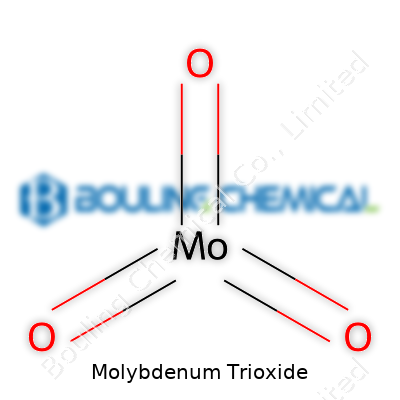
MoO3 plays a quiet but essential role from the heavy industry floor to high-tech labs. Its chemical formula may look simple—just one molybdenum and three oxygens—but the story behind how society uses it pulls lots of threads together: science, safety, and sustainability, all blending in material that continues to shape modern infrastructure and innovation.
Why Molybdenum Trioxide Demands Respect
Plenty of labs and factories rely on Molybdenum Trioxide. You’ll find it helping out in metal alloys, ceramics, and chemical work. For people who work with this stuff daily, a slip in storage practice can bring more trouble than most realize. Think health, quality, or wasted money. I’ve seen firsthand how a neglected container or a drafty storeroom leads to product loss, unnecessary cleanup, or even someone getting sick.
Humidity: A Friend to Avoid
Molybdenum Trioxide clumps or even starts changing if you store it somewhere damp. Moisture turns an easy-to-handle powder into a sticky mess, and this can start reactions nobody wants. A colleague once stored it too close to a window. A month later, the bottom of the bag was hard as concrete. Lesson learned: keep things dry. Any storage space should stay below 60% relative humidity, with a steady temperature and no swings. Silica gel packets or other desiccants soak up any sneaky moisture before it gets to your product.
Air and Light: Quiet Trouble
Open air sounds harmless, but it can slowly ruin Molybdenum Trioxide, especially with fluctuating oxygen and dust. I’ve seen samples stored uncovered pick up grime in less than a week. Best results come from keeping containers sealed tight—think screw-top drums or heavy-duty buckets, not thin bags. Store out of direct sunlight, too. UV light isn’t kind to many compounds, and it pushes the decomposition over time.
Label Everything, Lock It Up
Labels make a huge difference. I once worked in a space where two white powders switched places, and nobody noticed until much later. Proper labeling stops those headaches. Write the date, product name, lot number, and any safety info straight onto each container. Next, keep the area off-limits to visitors, children, food, or open flames. Access control isn’t just for big companies; even a single misplaced container can cause accidents, especially if coworkers rotate through the same storeroom.
Think Safety Every Step
No sense in handling a chemical with your bare hands, no matter how many times you’ve done it before. Nitrile gloves and a solid dust mask or respirator are standard for a reason. Nobody wants inhaled particles in their lungs or skin irritation. Clean up any spills, no matter how small. Having a spill kit nearby means you don’t have to scramble for paper towels or let the problem linger. Regularly revisit your safety data sheet too. I’ve seen too many places rely on old printouts while newer research points out extra risks.
Disposal and Longevity
Every team winds up with old or contaminated material. Don’t cut corners by tossing it in the regular trash. Contact a certified hazardous waste disposal team. Storing waste until pickup? Keep it in the same kind of sealed, labeled container as the main stock. If you’re ever unsure about shelf life, test a small amount. Most reputable suppliers can help you arrange checks or provide guidance.
Wrapping Up with Common Sense
In the end, the right approach combines routine, vigilance, and respect. Dry, dark, clearly marked, and secure space—these habits protect the workers and the company’s bottom line. Simple changes pay off in safety and in peace of mind.
Getting to Know Molybdenum Trioxide
Molybdenum trioxide exists as a pale yellow or white crystalline solid. If you've ever seen a chemistry lab's supply shelf, this stuff stands out in its own way. It doesn’t melt until about 795 degrees Celsius, which is higher than a lot of common metals you’ll find in an average workshop. To see something solid at that temperature tells you right away that it's built to handle heat.
Density and Structure
The density of molybdenum trioxide lands near 4.7 grams per cubic centimeter. That may not sound like much out of context, but compared to sodium chloride or common table salt (just over 2 g/cm³), you’re dealing with a material that feels heavy for its size. It isn't just about sensation in your hand; denser materials pack more tightly, which affects how they dissolve, react, or hold up under pressure. The crystal structure of this oxide, sometimes called alpha-MoO3, is layered. This helps in certain applications, such as catalysis or making thin films for electronics, since it can break apart more easily into flakes or sheets.
Thermal and Chemical Stability
Stability is where MoO3 steps ahead of many compounds. Anyone who's tried to synthesize materials at high temperatures or in tough chemical environments knows most powders break down, lose their properties, or react in unexpected ways. This trioxide keeps its properties even as the thermometer climbs. Since it survives in air up to its melting point, you see it used in glass manufacturing and ceramics. Thermal stability means less risk of material failure when things inevitably heat up.
Solubility and Interaction with Water
Many metal oxides are stubborn when it comes to dissolving in water, and molybdenum trioxide follows that trend. Drop some into a glass of water at room temperature, and you’ll notice only a slight amount dissolves. Add heat or a strong base, like ammonia, and you’ll get more out of it. This low solubility actually protects aquatic environments from major contamination if small amounts spill, but it also poses some headaches for industries that need it to dissolve for chemical processes.
Color and Appearance
Anyone working with molybdenum trioxide will remember its bright, almost lemon-yellow crystals. Under certain lighting, it can appear white, but that sharp color reflects its refractive index near 2.12. That might not jump out at you unless you’ve compared it with other oxides, but in pigments and indicators, every shade and shift matters. This shade appears in paints, inks, and glass, giving a unique touch to finished goods.
Practical Issues and Solutions
Handling molybdenum trioxide isn’t tricky in most labs or factories, but it tends to produce fine dust when disturbed. Anyone using it regularly ought to watch out for inhalation. Simple precautions—masks, ventilated hoods, and cleaning up after spills—turn this from a worry into standard procedure.
Production of this compound can involve roasting molybdenum ores, which produces fumes if done incorrectly. Modern plants use filters and closed systems to cut down exposure and environmental impact. This isn’t just about keeping rules; it keeps real people safe at work.
Why Physical Properties Shape Its Uses
All these features—high melting point, strong crystal structure, low solubility—explain why molybdenum trioxide proves useful in glass, batteries, and as a catalyst in making chemicals. Glassmakers rely on it for its resistance and ability to add strength. Battery engineers count on its layered structure when developing electrodes. Planners in chemical plants look at its stability and know it's not going to break down too quickly in fast-moving reactions.
The physical properties of molybdenum trioxide match up with the real needs of industries and researchers. Understanding these traits keeps workers safe, products stable, and innovations moving forward.