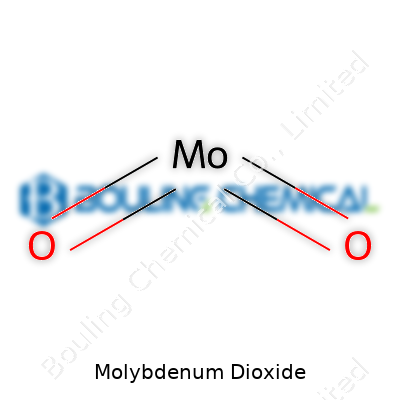
Molybdenum Dioxide: From Early Curiosity to Modern Applications
Historical Development
Curiosity about molybdenum compounds traces back to the 18th century, when Swedish chemist Carl Wilhelm Scheele first isolated molybdenum from its ore. Molybdenum dioxide, with its deep blue-black crystals, entered the scene as researchers looking for workable metals and catalysts started running experiments in the 19th and 20th centuries. The focus on energy production, catalysis, and electronics pulled this oxide into commercial and academic spotlights. Molybdenum dioxide emerged not as a main character, but as an indispensable supporting actor in processes refining petroleum, making new electrical contacts, and synthesizing specialty chemicals. Scientists searching for cost-effective, efficient, and durable solutions for industry repeatedly found themselves rediscovering MoO2’s strengths, especially as energy demands ramped up in the latter half of the 20th century.
Product Overview
Molybdenum dioxide, chemical formula MoO2, stands as a lustrous, dark solid that bridges the worlds of chemistry and materials science. Factories produce it mostly as a dense powder or finely divided crystals, feeding it into the stream of industrial processing. People encounter the product labeled simply as “molybdenum dioxide,” but in the trade, names like moly blue or molybdenum(IV) oxide pop up too. The market supports grades ranging from research-pure to technical grade, and most sources keep impurities like iron and silica under tight control. Companies that ship MoO2 track supply with precise weights, clear packaging, and concise labeling. That keeps storage safe and cuts down on waste, a lesson learned by handling incidents in the late 20th century.
Physical & Chemical Properties
MoO2 crystals come tightly packed, showing a dense, metallic sheen and a high melting point up past 1,100°C. This solid feels heavy relative to most metal oxides. It conducts electricity, but not as well as copper or silver; conductivity readings fall right where chemists like when searching for semimetals that blend strength and modest electron mobility. Its resilience against both high pressure and moderate acids means it holds up where lighter elements break down, though oxidizing acids and molten salts eventually wear it down. Molybdenum dioxide resists corrosion in air at low temperatures, keeping its metallic appearance until exposed to strong oxidizers. Industries rely on its consistent density, thermal stability, and predictable oxidation states, especially in the strict environments found in fuel cells and industrial reactors.
Technical Specifications & Labeling
Quality matters in bulk compounds, and manufacturers mark every bag and drum with a batch number, weight, MoO2 purity, and a safety statement. Pure samples typically test above 99% by weight MoO2, verified by X-ray diffraction and atomic absorption. Particle size, moisture content, and trace impurities show up in the paperwork, giving buyers peace of mind before adding powder to a process. Packages usually include MSDS data to spell out how to store, handle, and manage spills or fumes, a point emphasized after several minor incidents at refineries in the 1980s and 1990s. The shift towards digital records means traceability improved a lot in recent years, cutting down on off-spec shipments and making recalls rare.
Preparation Method
To make MoO2, manufacturers start by reducing molybdenum trioxide (MoO3) using hydrogen gas, methane, or even certain metals at high temperature. The reaction strips oxygen away, leaving behind the characteristic blue-grey MoO2. Experienced chemists tweak the temperature, gas flow, and reaction time to push conversion rates past 95%. Large industrial setups use cascade furnaces filled with MoO3 powder, streaming the reducing gas through in a steady flow. Many labs still prefer small tube furnaces for custom batches, and researchers sometimes explore wet chemical and solid-state routes, though cost and purity keep the focus on classic reduction methods for serious production. The historical lessons from metal reduction in steelmaking guide these operations, giving chemists reliable methods and scalable equipment.
Chemical Reactions & Modifications
Molybdenum dioxide anchors itself as a useful intermediate. When heated with more oxygen, it transforms quickly into molybdenum trioxide, a key step in producing pure molybdenum metal by further reduction. MoO2 also partners with sulfur, halogens, and acids, playing the role of both reactive agent and stable residue, depending on process needs. In catalysis, chemists dope it with rare earth elements or coat it onto ceramic supports, crafting hybrid materials that boost performance in hydrogenation or selective oxidation reactions. Research into surface modification paved the way for molybdenum dioxide’s entrance into electrochemical cells and advanced sensors. These customizations—layer thickness, doping level, particle size—directly affect outcomes, so chemists stay mindful of side reactions that might compromise finished products.
Synonyms & Product Names
Academic papers call it “molybdenum(IV) oxide” or “molybdenum dioxide,” while suppliers opt for concise names like MoO2 powder or molyblue. In the field, workers tend to drop the numbers and just ask for moly dioxide or grade four oxide, especially when moving material between storage and reactors. Specialty markets sometimes use codes or trade names, but the chemical industry sticks with traditional descriptors to avoid confusion—something I’ve found essential during cross-country procurement projects. The importance of clear labeling became obvious in joint projects with international teams where simple names avoided costly mistakes.
Safety & Operational Standards
Handling molybdenum dioxide needs discipline, but no need for extreme precautions if basic rules are followed. Dust inhalation raises mild health risks; respirators and dust extraction systems in the workplace keep exposures well under regulatory limits. MoO2 dust irritates eyes and lungs, so I always use safety glasses and gloves, habits drilled in during university labs and reinforced by industry protocols. Fire risk sits low, but warehouses treat any fine powder as a potential hazard, storing it in dry, ventilated bins, away from acids and oxidizers. Spills clean up easily with mechanical vacuum systems—never water, to prevent caking and runoff. Annual safety reviews, updated MSDSs, and team briefings catch new risks as research shifts and regulations tighten globally.
Application Area
Molybdenum dioxide shows up everywhere tools meet tough jobs. It anchors catalysts in refineries, quietly converting unsaturated hydrocarbons into fuels and lubricants. Inside solid oxide fuel cells, thin MoO2 films move ions smoothly, helping supply reliable electricity from hydrogen. Metallurgists rely on it for alloying and purification, pulling oxygen out of molten metals or prepping surfaces for bonding and coating. Advanced batteries and supercapacitors tap into its conductivity and chemical stability, key features for researchers chasing faster charge cycles and longer lasting performance. Ceramicists and pigment manufacturers blend MoO2 into specialty glazes, lending unique optical and mechanical properties. As conversations at trade shows reveal, the hunger for better performing, more durable, and sustainable materials keeps application engineers searching for new uses.
Research & Development
In research labs, molybdenum dioxide serves as a constant test case for new catalytic, electrical, and structural technologies. Scientists push the boundaries by adjusting particle shapes, doping with non-metals, or layering it with graphene. Projects funded through public grants dig into energy storage, hydrogen evolution, and selective chemical syntheses, where MoO2 outperforms classic catalysts or broadens the spectrum of viable reaction conditions. During joint studies with university groups, I’ve seen machine learning and AI-driven modeling speed up the hunt for optimal doping strategies, pointing to ways MoO2 could drive new efficiencies in green processes. This momentum spills over into patents, conference talks, and collaborative networks aiming at both incremental gains and breakthrough advances.
Toxicity Research
The toxicology of molybdenum compounds found a place in regulatory checklists as their use spread. Research shows MoO2 presents lower acute toxicity than most transition metal oxides, but chronic exposure still asks for respect. High doses in animal studies caused minor respiratory irritation and some changes in blood chemistry, but the evidence for severe long-term harm remains weaker than for related heavy metals like lead or cadmium. Occupational health limits rest below 5 mg/m3 in dust form, a threshold easily maintained with adequate ventilation and PPE. Recent academic work looks for subtle effects that could creep up over a working career, covering everything from enzyme interference to trace accumulation. As big industries adopt MoO2 more widely, further screening and transparency with public health records promise to keep the workforce and environment safer.
Future Prospects
Momentum builds as energy, electronics, and environmental markets grow hungry for better solutions. Molybdenum dioxide’s blend of conductivity, toughness, and reactivity puts it in conversations about next-generation batteries, water-splitting for hydrogen fuel, and ultra-thin flexible electronics. Researchers probe hybrid materials mixing MoO2 with carbon nanotubes or organic molecules, hunting for record-setting efficiency or durability. The pressure to cut precious metal use in catalysts pushes MoO2 into new pilot plants, especially in Asia where cost and availability drive decisions sharply. As regulatory pressure builds on waste handling and environmental release, clear labeling, recycling, and safer work practices follow suit. Trends in machine learning and data-driven process optimization suggest the next breakthroughs could come not just from chemistry, but from how people handle production and testing. The compound’s history of gradual improvement, steady performance, and reliable safety records hints at enduring presence across industries for years to come.
Pushing Steel’s Boundaries
Steel producers put molybdenum dioxide right at the top of their additives list. They know that a few percent of this gray powder can turn a middling alloy into a workhorse that shrugs off harsh environments. Builders count on those molybdenum-toughened steels when bridges stretch miles across rivers, or skyscrapers reach for the clouds — because those structures need materials that don’t give up easily when salt, moisture, or temperature swings get rough.
Back at the rolling mills, engineers grind molybdenum ores, reduce them, and out pours molybdenum dioxide. Factories soak up this powder for use in producing specialty steels and cast irons. Here’s the catch that folks outside the industry might not know: adding molybdenum dioxide to the melt doesn’t just give strength, it cuts down on corrosion. Fewer repairs down the road, less worry for inspectors, safer infrastructure for everyone.
Dreams of Clean Electricity
The energy world keeps leaning harder on molybdenum dioxide. Battery designers trust it because the oxide can swap electrons rapidly, and it stays solid after thousands of cycles. Inside a lithium-ion cell, molybdenum dioxide welcomes and releases lithium ions, playing a vital role in modern rechargeable battery prototypes.
Researchers want to squeeze out every last watt-hour from batteries, and molybdenum dioxide answers the call with its unique crystal structure. So far, labs have turned out flexible battery sheets as thin as printer paper, each one using molybdenum dioxide layers for smoother ion transport. That means more robust energy storage, longer laptop runs, more powerful electric vehicles, and maybe fewer dead phones when you need them.
Catalysts That Clean and Transform
Oil refineries and chemical plants have a different appreciation for molybdenum dioxide. In those places, it works as a catalyst to pull sulfur from fuels, making gasoline and diesel cleaner. Without this oxide running the show inside reactors, tailpipes would spew out more sulfur compounds. Clean air laws keep getting stricter, so demand for reliable sulfur-removal catalysts rises.
Synthetic chemists see even more potential. Molybdenum dioxide jumps into organic reactions, especially when the industry looks for milder, more sustainable routes to make drugs, plastics, or coatings. A good catalyst does more than speed things up — it makes the process work with less heat, less waste, and often a smaller environmental footprint.
Routes for Progress
Costs come up in every discussion about advanced materials, and molybdenum dioxide isn’t immune. Fortunately, new recycling methods now recover oxides from spent catalysts and electronic waste. Better circularity means more reliable supply and less mining—a win for both industry and the planet.
Safety and health also demand attention in workplaces handling metal oxides. Air monitoring keeps dust down, and modern ventilation systems cut health risks for operators. Companies that value their people invest in training and personal protective equipment, showing that responsible production pays off over time.
As the needs of technology, infrastructure, and clean energy grow, molybdenum dioxide shows up in more conversations—not just with scientists, but with everyday folks who depend on safer, sturdier, and greener products.
Understanding Purity in Real Terms
Anytime a company or lab asks about the purity of Molybdenum Dioxide, it’s not just a matter of numbers on a sheet. Purity levels shape more than just bragging rights—they decide if the end product is fit for its purpose. I’ve seen projects stall because someone didn’t check the specs until late in the game. You don’t want to scramble fixing outcomes you could avoid by demanding proof up front.
The Number: 99.5% Min Purity
Our Molybdenum Dioxide often exceeds 99.5% purity, and that is no throwaway detail. It means trace elements like iron, copper, and sulfur show up in minute quantities, mostly below 0.05%. Real-world applications notice this difference. Battery manufacturers, glassmakers, and chemical processors tend to stay away from anything lower, because impurities can cause side reactions, color shifts, or early failure in products. If you’re in an industry where outcomes depend on reaction kinetics or color stability, even one tenth of a percent can change the game.
What this Purity Level Delivers
I’ve worked alongside engineers who tested Molybdenum Dioxide samples from different suppliers. Lower-purity samples leave behind more contaminant buildup on reactor walls and catalyst beds. That eats into both yield and equipment lifespan. Starting with 99.5% or better, batch after batch, brought consistency and cut down on those unexpected shutdowns.
Electronics don’t have time for second-guessing. Contamination means poor conductivity and short life cycles. High-purity Molybdenum Dioxide keeps technical ceramics dense and reliable, especially in high-temperature or corrosive settings. That reliability impacts bottom lines and safety in the field.
Proof and Testing
You don’t take purity claims at face value. Anyone can write a big number, but what counts is a certificate of analysis from an accredited lab that uses ICP-OES or XRF testing methods. I’ve seen companies do a spot check—and walk away when a supplier’s product fails to match the claim. A serious operation should make sure each batch carries a fresh COA, not just a recycled document. Trace elements like lead, arsenic, and antimony get flagged fast by responsible buyers using these tests.
Why Keep Pushing for Higher Purity?
Industry isn’t standing still. Over the last decade, the demand for ultra-pure materials isn’t just limited to semiconductors. Energy storage and specialty catalysts have no back-up plan for faulty raw materials. Pressure from clients pushes suppliers to step up refining methods, filter designs, and batch tracking. If you’re buying on price alone, sooner or later someone down the line will absorb those hidden costs.
What You Can Do
Ask about the COA, cross-check batch numbers, and visit the supplier’s facility if they allow it. Look for third-party accreditations. If you see a claim without hard data, keep looking. Remember, no big process step or innovation will fix poor raw material. The purity of Molybdenum Dioxide ends up affecting every stage from furnace to final product. Getting the number right lets you focus your time and budget on real breakthroughs, not expensive workarounds.
Different Shapes, Different Jobs
Anyone who’s run a lab knows: chemicals don’t behave the same way just because they share a chemical formula. Take molybdenum dioxide. It’s got the "MoO2" label on the bottle, but what’s inside might be a coarse gray powder, a fine black dust, or even dense granules. Sounds like a detail only a chemist would sweat, but ask a ceramicist, a battery manufacturer, or someone making specialty glass — these aren’t small details.
Particle Size Drives Performance
Years back, helping a research team crank out a new catalyst meant spending hours tweaking the grind of starting materials. Too chunky, and reactivity stalls out; too fine, and the material clumps or floats off with the next breeze. Every process responds to these shifts. For example, fine molybdenum dioxide powder mixes easily with other powders for sintering or pressing high-density parts. In battery production, particle size can change how fast the electrode material charges and discharges. Superfine particles help make uniform coatings, but they’re a mess if you don’t have the right equipment.
Glass manufacturing shows another side of the story. Batch consistency goes straight out the window if you add a material that won’t disperse evenly. Suppliers with only one particle size aren’t going to solve every issue either. Someone always needs a grade that grinds smooth for coatings, or a coarser grade to feed a furnace, or even a custom form to avoid dust all over the shop.
Where Sourcing Gets Real
Reliable suppliers know that not every shipment can look the same. I’ve seen production grind to a halt over a small shift in lot-to-lot consistency. For high-volume use, like alloying or ceramics, companies often demand coarse or milled forms to run through standard handling systems. Powders with wild variation become a headache for people downstream — imagine recalibrating every time a shipment lands. Consistent, predictable quality isn’t just a catchphrase. It’s tied to cost, time, and product standards.
Regulations jump in too, especially in industries where dust exposure creates health concerns or production risks. Engineering controls don’t come cheap. Large grain forms or pelletized grades can knock out a big chunk of airborne risk, saving time spent managing dust or failed filtration systems. Facilities looking to keep clean air standards lean heavily on choices made before a box gets opened.
Solutions for the Real World
Working with molybdenum dioxide gets smoother with a supplier willing to think outside the catalog. Some producers offer custom milling or blending so users get a form that fits their setup. Open communication pays off here—explaining end use, discussing challenges with past grades, or sharing goals for the next run. In some cases, pilot samples save months of reworking processes, not to mention the cost of scrapping bad batches.
At the end of the day, chemistry only goes so far. Particle size and form shape almost every step from shipping dock to product shelf. Companies with experience in those trenches can cut through a lot of the noise and keep quality high. That cuts costs, boosts safety, and keeps new ideas moving from bench to market.
Why Storage Matters
Keeping chemical materials in good shape doesn’t just protect the bottom line, it keeps people safe and supports research that matters. Molybdenum dioxide lives on lab shelves, in factories, and sometimes in university closets. Safe storage means less waste, fewer accidents, and more reliable results.
Lab techs remember the mess after a power outage ruined temperature-sensitive chemicals. Crumbled powders, clouded liquids—no one enjoys tossing out expensive stock. Taking time to store things the right way saves money, but even more, it preserves quality and ensures that folks down the line get accurate search results or safe products.
Main Things to Watch For
Molybdenum dioxide doesn't pose some of the severe risks of volatile metals, but it lasts much longer and keeps its properties intact in dry and cool spots, away from direct air and strong acids. The stuff prefers low humidity—think nicely ventilated storage rooms, well above any sources of water. Damp air leads to clumping and, over the years, can drive small chemical changes. Not many want a powder that won’t pour or a chemical that causes unwanted contamination.
A simple, resealable glass or plastic jar blocks moisture. Labels matter—write down what’s inside, the date it landed, and any special notes. This saves everyone from digging up safety sheets or taking a wild guess about what’s in the container.
Temperature and Light
Room temperature works just fine. Freezers and refrigerators don’t make much of a difference. Far more important is to keep molybdenum dioxide out of direct sunlight. Sunlight breaks down many chemicals over time, and it doesn’t help this one either. A shaded shelf or dedicated chemical cabinet keeps things stable. Temperature swings cause the same headaches for almost every reagent—so skipping drafty windows and hot radiators makes a difference.
Avoiding Trouble With Incompatible Chemicals
Other chemicals nearby can make storage tricky. Molybdenum dioxide should not sit close to strong oxidizers, acids, or bases. Accidental spills in a crowded cabinet might turn an accident into a bigger problem, so separate shelving for metal oxides and reactive substances reduces that risk. Signs and dividers go a long way in shared spaces, and regular checks keep surprises at bay.
Why This All Matters for Labs and Industry
Poor storage can turn an inventory list into guesswork. On a busy day, mistakes multiply. Following basic safety routines stops these problems before they start. Every researcher or technician has tossed out ruined samples and knows the quiet frustration that brings. Storage is worth the extra couple of minutes.
Each chemical carries its own quirks, so updating storage policies and keeping everyone trained gives labs and industries a real edge. Reliable molybdenum dioxide means projects stay on track, whether engineers build alloys or students learn to analyze metal oxides. People can accomplish more with fewer setbacks.
Steps Toward Better Practices
Mount clear signs for storage areas. Keep inventories digital, with logs for opening dates and locations. Plan periodic checks of containers for leaks or water stains. A central chemical management team helps, especially on larger sites. Even small labs see benefits from a weekly walkthrough. The most advanced research touches simple things—good habits, a clean label, and a lid screwed on tight.
Getting Real About Molybdenum Dioxide
Molybdenum dioxide doesn’t show up in everyday conversations, but anyone working in labs or certain industries comes across this gray powder more often than most realize. I spent a stint in a ceramic research lab, and even the most routine mixing process demanded attention. This isn’t garden-variety dust—molybdenum can end up in your lungs or on your skin if you cut corners with safety.
Understanding Where the Risks Lie
Dust is the big problem with this compound. Tiny particles can float up when the bag opens or when you start measuring. You might not see them, but your lungs notice right away. Once, nobody in our workspace wore a mask just because we were “out for a minute.” Several of us coughed for hours afterward. Over time, breathing in dust like this can cause irritation or worse, especially if your exposure keeps adding up.
Moisture doesn’t neutralize the risks either. Molybdenum dioxide doesn’t dissolve in water, so washing it away feels almost pointless if you don’t scrub well. Simple handwashing before eating or drinking breaks should be automatic. People rarely think about accidents like touching your face after handling powders, but these are the moments that cause problems. I saw coworkers rub their eyes and leave for the nurse’s office more than once after skipping gloves, learning a good lesson the hard way.
Personal Protective Equipment Isn’t Just for Show
Lab coats, safety glasses, and gloves turn into your new best friends. N95 masks or, better, a respirator keeps anything airborne out of your nose and throat. Gloves make good sense: nitrile or latex work for routine handling, but always inspect for holes beforehand. Eye protection seems like overkill until you watch someone deal with a powder splash. Even those who roll their eyes at “too many rules” start following suit after seeing one close call.
Ventilation: The Unseen Shield
Ventilation becomes crucial. Fume hoods aren’t just fancy furniture; they pull dust and fumes away before anyone breathes them in. The labs I worked in ran air filtration year round, not just for fancy chemicals, but for anything that might get airborne, especially powders like molybdenum dioxide. Without decent airflow, even brief work leaves the air thick and risky.
Storage and Cleanup Matter Each Day
Molybdenum dioxide won’t explode or catch fire under normal handling, but sloppy habits cause trouble. Tightly seal containers after use. Label everything clearly. Don’t sweep up spilled powder with a dry broom; use a vacuum with a HEPA filter or very lightly dampened materials to pick up what’s left. I remember someone sweeping carelessly, sending a cloud across half the room. It’s easy to forget how quickly dust can travel.
Disposing of molybdenum dioxide takes care too. Local rules often treat heavy metal compounds like this as hazardous waste, so get rid of them in designated bins—never down the sink or in regular trash.
Solutions Start With Respecting the Compound
The safety record around molybdenum dioxide improves dramatically when workers see each step as part of a bigger system. Training makes a difference. Reminders about even basic hygiene—no food or drinks at the bench, washing hands before breaks, changing gloves regularly—actually cut down problems. What gets ignored most is familiarity; just because something seems routine doesn’t mean it’s safe to drop your guard.
Leaders set the tone. When supervisors model good procedures and keep fresh protective supplies on hand, everyone follows. People who take the risks seriously end up safer, and it shows in every shift that ends without a story to tell.