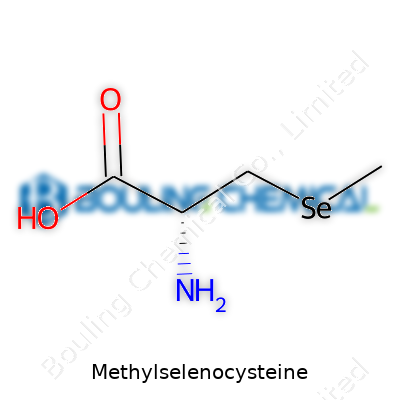
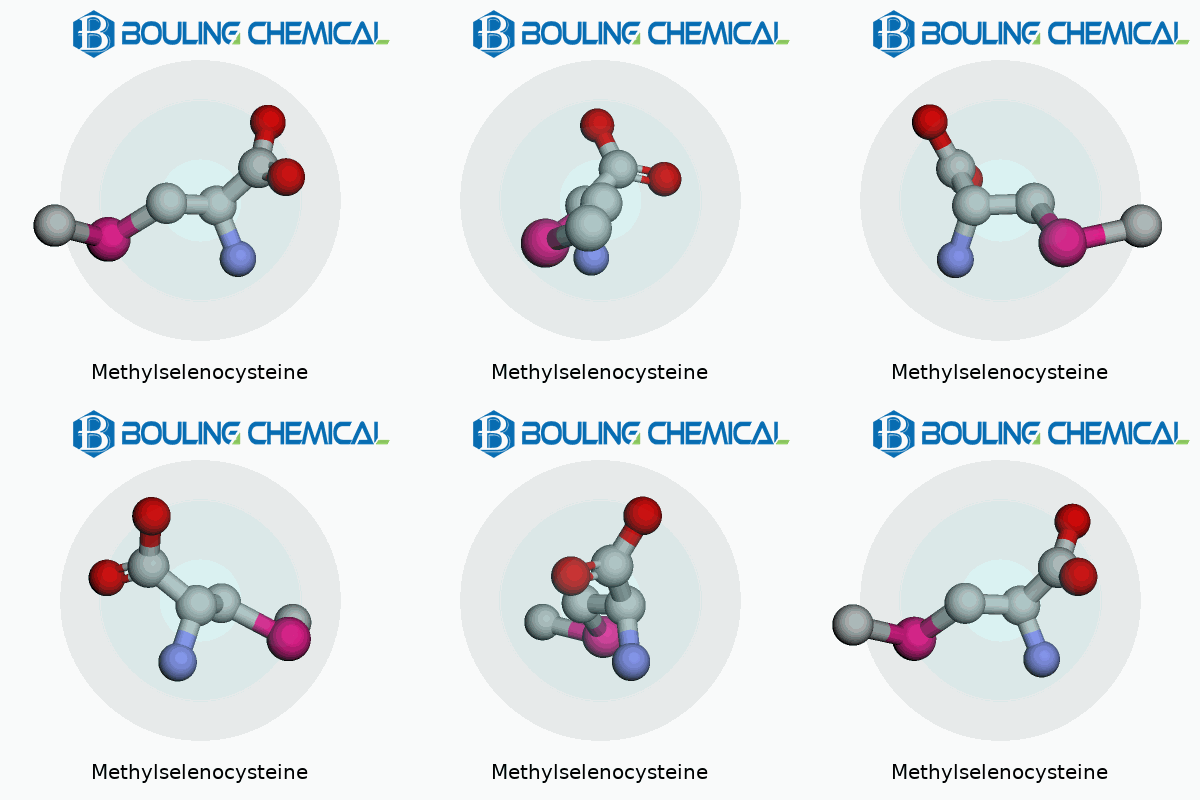
Methylselenocysteine: An In-Depth Commentary
Historical Development
Long before modern science gave a name to methylselenocysteine, people recognized the powerful benefits of selenium in food, even without understanding its true role. Selenium itself started getting noticed as far back as the early 1800s, oddly enough due to the toxic effects observed in livestock grazing on selenium-rich plants in the Americas. In the 20th century, researchers drew connections between selenium and cancer prevention, opening new directions for scientists studying dietary selenium forms. Methylselenocysteine entered the spotlight as scientists realized that not all selenium compounds behave the same way in the human body. Its unique metabolic path, with reduced toxicity compared to inorganic selenium, shifted attention to potential applications in health and disease prevention. Over the past three decades, the growth of plant-based diets and personalized nutrition fueled more interest in organic selenium species, including methylselenocysteine, setting the stage for expanded research and commercial products.
Product Overview
Methylselenocysteine stands out from other selenium supplements due to its presence in nature and relatively established safety profile. Found in certain Allium and Brassica vegetables—like garlic, onions, and broccoli—this organic selenium compound built its reputation not through shelf claims but through decades of agricultural and clinical study. People naturally ingest methylselenocysteine from certain food sources, though concentrations fluctuate dramatically based on plant type and soil conditions. In supplement form, methylselenocysteine appears mainly as a fine, white to off-white powder. Producers aim for high purity, often above 98%, to ensure dose control and reduce by-product contamination. Unlike selenomethionine, another common organic selenium compound, methylselenocysteine breaks down differently inside the body, generating methylselenol which scientists link to protective cellular pathways. This distinction drives ongoing debate over which selenium species offer the best benefits in food and supplements.
Physical & Chemical Properties
Though methylselenocysteine may look simple, its characteristics present challenges during synthesis, formulation, and storage. Structurally, the molecule resembles the amino acid cysteine, with selenium replacing sulfur and a methyl group attached to the selenium atom. This tiny tweak in structure swaps predictable sulfur chemistry for selenium’s trickier, more reactive profile. Methylselenocysteine comes with a molecular weight just above 196 g/mol. It dissolves fairly easily in water but breaks down under light or heat, making careful handling critical for both research labs and manufacturers. This sensitivity influences how the compound moves through plants, foods, and supplements. Chemically, methylselenocysteine resists spontaneous oxidation a bit better than some other organic selenium compounds, though air, moisture, and temperature can still trigger slow degradation. Managing these physical quirks demands well-controlled production, airtight packaging, and steady environmental conditions from lab to shelf.
Technical Specifications & Labeling
Manufacturers of methylselenocysteine base their quality standards on several industry benchmarks. Pure product typically shows 98% or higher methylselenocysteine, with limits on heavy metals and other selenium species. Water content sits below 2% to minimize hydrolysis and shelf instability. Analytical labs check these figures by chromatographic and spectrophotometric methods, confirming both identity and concentration. Labeling raises its own challenges, since not all countries allow marketing of every selenium form for every purpose. In North America, food supplements declare selenium content in micrograms, often specifying the source as “methylselenocysteine” or “Se-methyl-L-selenocysteine.” European Union regulations tighten control, demanding verified forms and strict labeling of potential allergens or additives. End users rely on these label claims for safe dosing, especially given the narrow gap between selenium’s essential and toxic levels. Some producers provide certificates of analysis, batch traceability, and compliance with global safety codices like ISO and GMP.
Preparation Method
Producing methylselenocysteine at scale relies on a combination of organic synthesis and fermentation technology. One popular route starts with L-cysteine, using methylation and selanylation steps to attach selenium and a methyl group to the reactive thiol site. Alternatively, biotechnology approaches engineer microbes—most often E. coli or yeast—to incorporate selenium into amino acid pathways, then secrete or accumulate methylselenocysteine for extraction. Both methods call for strict control over reaction conditions, as side products and incomplete reactions can contaminate the final batch. Purification often uses ion-exchange chromatography and crystallization to separate methylselenocysteine from unreacted residues, followed by filtration and drying under vacuum. Producers constantly refine these techniques to raise yields, lower waste, and deliver a more consistent final product, while also keeping costs manageable for food, pharma, and supplement markets.
Chemical Reactions & Modifications
Methylselenocysteine reacts much like related amino acids, though swapping selenium for sulfur changes its behavior in both lab and body. In chemical syntheses, methylselenocysteine serves as a starting point for other selenium-containing molecules, including derivatives with altered methylation or acetylation for specific applications. Under oxidative conditions, the selenium atom can form selenoxides or selenones, influencing both stability and biological reactivity. Inside the body, methylselenocysteine undergoes enzymatic cleavage to release methylselenol, a volatile compound that many researchers associate with anticancer and antioxidant effects. Unlike some inorganic selenium compounds, it shows less tendency toward dangerous redox cycling, making it less likely to cause DNA damage or excess oxidative stress. Scientists modify methylselenocysteine’s chemistry by altering side chains or linking it to carrier molecules, aiming for targeted delivery inside cells, improved shelf stability, or new functions in synthetic biology. Some of these engineered forms appear in patented drug candidates or specialized animal feeds, though safety remains a watchword before these see broad use.
Synonyms & Product Names
Common names for methylselenocysteine echo its chemical makeup, yet global supply chains and diverse industrial sectors yield a whole array of alternative names. Research papers call it Se-methyl-L-selenocysteine or MSC. Ingredient lists and supplement packaging may include words like L-methylselenocysteine, SMC, Selenosugar C, or simply “Organic Selenium (from Allium Extract).” Pharmaceutical or agricultural products might use trade names if formulated with specialty carriers or in proprietary blends. With regulatory environments tightening around selenium sources, companies often highlight the natural origin—such as “broccoli extract standardized to MSC”—to reassure consumers. Despite similar names, not all selenium ingredients function the same, so clarification on specification sheets and certificates of analysis proves critical for buyers and end users. Scientists stick to IUPAC conventions; marketers and consumers latch onto whatever signals natural origin, purity, or scientific credibility, sometimes muddying clear comparisons.
Safety & Operational Standards
Working with methylselenocysteine demands a mix of established chemistry know-how and modern safety culture. Selenium’s notorious double edge—essential in micrograms, toxic in milligrams—drives regulatory agencies and manufacturers to put robust guardrails in place. Workers use gloves, goggles, and fume hoods when handling raw material or synthesis intermediates, with routine air monitoring in large facilities. OSHA, NIOSH, and similar bodies worldwide set workplace exposure limits for selenium compounds, though organic forms like methylselenocysteine usually carry less immediate hazard than sodium selenite or selenate. Companies source raw materials in compliance with international codes, keep detailed batch logs for traceability, and train staff on evacuation or spill response protocols. Finished supplements undergo routine testing for heavy metals, microbe contamination, and marker purity. Food and supplement brands face strict recall penalties for mislabeling, misformulation, or exceeding maximum daily intake limits, which run just a few hundred micrograms for adults. These high standards not only protect workers and consumers but also shield producers from costly legal fallout.
Application Area
Methylselenocysteine’s rise tracks growing public focus on health, longevity, and evidence-based supplements. Researchers first homed in on its potential to reduce cancer risk, driven by epidemiological studies linking selenium-rich diets with lower cancer rates. Follow-up lab work showed methylselenocysteine has less tendency to accumulate in non-target tissues (like nails, hair, or kidney) and a greater share of its metabolites actually reach key cellular machinery. Beyond cancer, scientists and clinicians track MSC for cardiovascular health, immune modulation, and support for thyroid function. In agriculture and animal husbandry, methylselenocysteine enters the scene through selenium-enriched feed crops, boosting livestock resistance to stress and disease. Specialty food manufacturers blend methylselenocysteine into functional foods, beverages, or nutraceuticals, aiming for cleaner labels and added value. Some cosmeceutical brands tinker with selenium additives for hair and skin, though these remain niche at best. Industry looks for ways to harness MSC’s unique redox properties in biocatalysis and chemical manufacturing as well, yet safety and cost hurdles slow adoption outside the health sector.
Research & Development
Academic labs and private companies run parallel tracks in methylselenocysteine studies. Scientists push ahead on mechanistic work—charting every step from absorption in the gut to entry into cells, to breakdown and exit routes. Animal and early human trials look at methylselenocysteine’s ability to block cell mutations, suppress inflammation, or fine-tune immune function. Technology developers test MSC in new supplement forms—time-release capsules, sprays, gels—to boost absorption or overcome taste and shelf-life limits. Research leaders in Asia, North America, and Europe compete and collaborate, churning out dozens of new papers each year. One can watch funding shift from basic discovery to patent applications and pilot manufacturing, especially as personalized nutrition and DNA-driven dietary advice gain steam. Innovators seek ways to cut production costs, lower environmental impact, and maximize bioavailability. Some groups go further, exploring selenium analogues for rare diseases or as adjuvants in chemo and radiotherapy. As more human studies wrap up, expect new clinical data to redraw the map on which populations should use methylselenocysteine, in what doses, and for what health targets.
Toxicity Research
Every benefit of methylselenocysteine comes with a need to prove safety, a lesson learned the hard way from historic selenium poisonings. Laboratory researchers examine how MSC behaves in cell cultures and animal models, tracking organ distribution, metabolites, and markers of stress or damage. At reasonable intake levels—generally under 400 micrograms per day selenium—side effects stay rare, with no evidence of long-term organ burden. Go beyond that, though, and liver, hair, and nail symptoms pop up, echoing selenium toxicity seen with older inorganic compounds. What makes MSC different is its metabolism—it converts more smoothly to harmless end products without generating high local concentrations or unpredictable tissue buildup. Regulatory toxicologists and academic researchers keep tabs on any potential for interaction with drugs, vitamins, or minerals, prizing MSC’s predictability compared to sodium selenite or selenomethionine. Emerging studies zero in on sensitive groups, such as pregnant women, people with kidney issues, or those on chronic medications, to set clearer safety caps. As supplement markets push for ever larger doses and multi-ingredient stacks, toxicologists push back with data to protect public health.
Future Prospects
Looking ahead, methylselenocysteine stands poised to play a bigger role as people seek smarter, science-backed solutions for health and well-being. Researchers and producers both see demand expanding among aging populations, athletes, those looking to fine-tune dietary selenium, and increasingly, pet and livestock sectors. Next-gen supplement delivery systems may harness nanoparticles, encapsulation, or custom blends to boost absorption. Advances in precision fermentation could drive down production costs, making MSC more mainstream not just as a supplement, but as a functional food ingredient. On the biotechnology side, genetic engineering of plants to enhance MSC content opens possibilities for naturally selenium-rich produce—potentially addressing deficiencies in entire populations. Real challenges remain, especially in separating hype from real health benefit and keeping regulatory pace with rapid innovation. Methylselenocysteine, once a chemical curiosity from a few vegetables, continues to spark new directions in nutrition, medicine, and green chemistry, leaving plenty of open ground for researchers, industry, and health-conscious consumers alike.
Getting Straight to the Point About Selenium
Methylselenocysteine, known mostly through its connection with selenium-rich plants like garlic, broccoli, and onions, gets attention from science thanks to its possible health perks. Selenium earns respect in the nutrition world because the human body runs into real trouble when it doesn’t have enough. We’re not talking about a miracle solution, but a compound worth a closer look, especially for its role in supporting resilience at the cellular level—for people like me who believe small steps in diet can add up to lasting change.
Backing the Hype With Evidence
Plenty of research focuses on the ways selenium-packed compounds like methylselenocysteine might defend cells from stress. Scientists at institutions like the National Cancer Institute and the Mayo Clinic point out that this compound acts as a building block for valuable antioxidants. Why care about antioxidants? They help neutralize free radicals—byproducts of daily living that wear down cells and connect with heart disease, cancer, and even autoimmune imbalances.
Studies show that cells exposed to the natural versions of selenium, like methylselenocysteine instead of the isolated salt forms, handle stress better. For example, in animal research published in reputable journals, cancer onset slowed when diets included natural selenium sources, and markers of cell damage dropped. These aren’t promises, but they do offer some hope—a belief shared by people who want their food to pull a bit of double duty.
Real Benefits, Real People
People living in regions where the soil lacks selenium often face higher rates of thyroid disorders and weak immune responses. I grew up in a place where nutrition advice stuck to the basics—don’t skip your veggies, get whole grains, don’t overdo the salt. Learning that compounds like methylselenocysteine can sneak extra health benefits into daily meals feels like finding out there’s bonus track on your favorite album. With most folks getting selenium from food, eating a handful of Brazil nuts or integrating more allium vegetables fits easily into tradition and doesn’t take a lot of extra work.
Looking Beyond Headlines
People ask whether they should rush to the store for supplements. Most get enough selenium already. Loading up on extra through pills can actually sink levels of other nutrients or lead to toxicity, putting kidneys and nerves at risk. Bodies deal better with nutrients from food than from synthetic pills. The science hasn’t put its full weight behind high-dose supplementation either. Registered dietitians and medical guidelines both recommend aiming for balance and moderation, using food as the foundation of good health.
Smart Steps Forward
Nutritional diversity makes a difference. Relying on a single nutrient or compound to fix everything leads to disappointment. Instead, look at methylselenocysteine as part of a bigger toolbox. Growing garlic or broccoli, hunting for fresher options at the market, or learning how to prepare vegetables in ways that keep nutrients intact—these steps have helped my own family. Access to better food choices works better than isolating compounds and selling them as cures.
The key: keep learning what’s in your food, cook more meals at home, and talk to licensed healthcare professionals when deciding if any supplement fits your own health picture. Not every new discovery needs instant action. Sometimes real health change starts by switching up dinner, not just buying another bottle off the shelf.
Looking Beyond the Label: What Is Methylselenocysteine?
Supplements fill pharmacies and online carts, offering everything from stronger bones to sharper memory. Methylselenocysteine popped up on my radar after a friend started taking it for “selenium support.” As a compound found mostly in plants, methylselenocysteine delivers selenium—a mineral that plays a key role in the body’s fight against oxidative stress and supports normal thyroid action. Most people know selenium as one of those quiet, behind-the-scenes nutrients, but the spotlight shifts when supplements like this start trending among people focused on longevity or cancer prevention.
Research: The Good and the Gaps
Science has explored methylselenocysteine but only scratched the surface. Animal studies suggest it gives more bioavailable selenium than selenomethionine, which gets stored in proteins all through the body. Researchers paid attention to methylselenocysteine’s potential anticancer properties, especially after seeing it block certain pathways in mice. But a mouse isn’t a person. Until there’s more robust clinical evidence in humans, the gospel about its benefits remains unwritten.
Human trials with selenium in various forms offer a mixed bag. Some, like the Nutritional Prevention of Cancer Trial, point toward protective effects against certain cancers at moderate doses. The SELECT trial, much larger, threw cold water on that idea—no real drop in prostate cancer, and unexpected side effects for folks with adequate selenium in their bodies. We’re left sifting through conflicting stories, where the form of selenium could make a difference, but nobody has clear answers yet.
Safety: How Much Is Too Much?
Selenium acts almost like a double agent. You need it in tiny amounts, but too much may tip into toxicity. In high doses, selenium can cause nausea, brittle hair and nails, and a metallic taste. The Institutes of Medicine sets the tolerable upper intake level for adults at 400 mcg of selenium per day from all sources. Between Brazil nuts, fortified cereal, and the odd multivitamin, most folks reach the recommended daily selenium intake (about 55 mcg) without thinking about it.
No major studies point to specific harms from methylselenocysteine specifically when kept within recommended selenium totals. Still, rare supplements create challenges. Quality can drift between brands, and contamination or incorrect dosing sometimes sneaks into even trusted online shops. For people on medications or those with thyroid disease, selenium tweaks can cause trouble. A talk with a healthcare provider brings reassurance here—especially if prescription interactions or existing health issues play a part.
A Personal Take: Practical Steps for Real Safety
Trying to optimize nutrition brings up more questions than answers, especially when research runs thin. My own approach leans on food first: a Brazil nut here, some eggs there, a few mushrooms. These natural sources offer selenium wrapped in other valuable nutrients and keep trace minerals in balance. Buying supplements like methylselenocysteine feels tempting—who isn’t swayed by promises that sound close to magic? But without exhaustive research and transparent labeling, skepticism serves as a good shield.
Anyone considering methylselenocysteine should look for third-party testing and clear dosing instructions. Careful reading of total daily selenium from food plus supplements avoids unwanted side effects. Reliable support comes not just from what you take, but also from honest conversations with qualified health professionals who stay up to date on emerging research. Safety often comes down to smart questions and healthy skepticism, especially in a market crowded with bold claims and thin evidence.
Getting Real about Dosage
Walking down any supplement aisle, it's easy to get overwhelmed, especially with compounds you won’t hear about in casual conversation. Methylselenocysteine, a form of selenium found in plants like garlic and broccoli, has popped up in research for its potential health perks—especially related to certain cancers and antioxidant protection. Doctors and nutritionists I’ve spoken with don’t hand out a single recommended dose for everyone, since most studies and the United States National Institutes of Health (NIH) still set selenium’s upper intake limits based on more common forms like selenomethionine or sodium selenite. Here’s where things stand from my own years reading about nutrition and sifting through clinical trials.
Recommended Selenium Intake
Each adult needs about 55 micrograms (mcg) of selenium per day, says the NIH. That accounts for selenium from all sources, including methylselenocysteine, and sits well below the official upper limit for adults, capped at 400 mcg. Regular multivitamins usually stick around that 55 mcg mark. What gets tricky is that supplements don’t always spell out what form of selenium they include. Methylselenocysteine appears mainly in some "yeast-based" or "Se-methylselenocysteine" labeled supplements; the amount still counts toward that daily selenium total. In much of the published research, scientists give volunteers between 100 and 200 mcg of selenium daily, sometimes as methylselenocysteine. People who ate garlic or broccoli got roughly similar amounts. Scientists picked those doses based on studies showing benefits and safety, but not every individual gets the same results.
Why Dosage Matters
Selenium is a trace mineral. You need it, but only in small amounts. Too much over time can cause selenium toxicity, which comes with side effects like brittle nails, hair loss, and stomach trouble—nobody wants that. There’s no strong evidence more is better, either. Long-term studies following large groups of people haven’t shown that taking over 200 mcg per day lowers disease risk further. The human body stores selenium, and it adds up: overdoing it on supplements when your diet already includes seafood, Brazil nuts, or selenium-fortified grains can push you past that upper limit without realizing it. Anyone with kidney issues or on dialysis should talk to a doctor, as selenium can build up faster.
Staying Practical and Safe
Dietitians I trust recommend most healthy adults focus on food sources first—adding one or two Brazil nuts to your weekly routine or enjoying whole grains, eggs, and seafood brings selenium to practical levels. If your doctor or registered dietitian suggests a supplement, look for clarity on the label: how much selenium, and in what form. Methylselenocysteine does get absorbed well by the body and is much less likely to cause toxicity compared to some other forms, but the safe daily range applies across the board. Most supplement capsules fall between 100 mcg and 200 mcg per serving. For folks working with a cancer specialist or on a plant-based diet, it makes sense to check with a health professional before adding anything to your lineup. Blood selenium levels don’t need checking for every person, but they can help in special cases.
Smart Choices Moving Forward
Nutrition seems confusing, but the fundamentals hardly change. With methylselenocysteine, sticking to supplements dosed in the 100–200 mcg range per day keeps you within safe territory if your diet is low in selenium. For most adults, aiming for the 55 mcg recommended daily intake from food means you're covering your bases. The research field around selenium is growing, and more studies continue to shape our understanding, especially about long-term impacts and different dose levels. Until then, calculated, informed steps with any supplement—especially one as potent as selenium—win out over guessing. Trust evidence, know what’s in the bottle, and ask questions when in doubt.
Methylselenocysteine has grabbed a bit of attention in the world of nutritional supplements. Some people see it as a promising way to boost selenium intake for good health. On paper, it sounds straightforward—a compound found in foods like garlic and broccoli, sometimes bottled up for its antioxidant promise. But every time something new rolls onto shelves, it pays to slow down, dig into the details, and look out for possible side effects or drug interactions.
Potential Side Effects: Don’t Ignore the Signals
It’s tempting to believe that “natural” always means “safe.” Nature can pack a punch, too, especially with trace minerals. I learned pretty early on that selenium, though essential, can turn toxic fast if you overdo it. Stories from folks pushing the limits with high doses often echo through health forums: that metallic taste in the mouth, tiredness, maybe a bit of stomach upset. Push it past what the body needs and you might feel hair loss, brittle nails, irritability, or worse.
There isn’t a huge stack of studies on methylselenocysteine specifically, but general selenium toxicity feels uncomfortably close if you don’t keep an eye on dose. The safe upper limit for selenium runs about 400 micrograms each day for adults. No supplement or “superfood” label changes that basic fact. Over many years, researchers have noted selenosis—long-term toxicity symptoms—popping up where intake goes way past that line. No reason to roll those dice.
Drug Interactions: More Than Meets the Eye
Personal experience taught me to tell doctors about every supplement. That includes new ones like methylselenocysteine. The way selenium moves through the body means it can interact with some medications. People on blood thinners like warfarin sometimes see changes in how their medicine works if they dial up selenium intake. Talk with a doctor, or the pharmacist who knows your full list, before layering this on top of any prescription.
Another place where things get complicated—chemotherapy. Scientists have asked if selenium might soften the blow of chemo’s side effects or even make cancer fighting drugs less effective. Research keeps rolling in but definite answers stay thin. Only an oncologist should call that shot. Guessing your way through this kind of combo can do more harm than good.
Who Should Take Care with Methylselenocysteine?
No two bodies work exactly alike. A pregnant or breastfeeding woman needs much tighter control over anything that affects the developing baby. Kids and teens, too. People living with thyroid disorders already have enough going on with their hormones—extra selenium can tip that balance the wrong way. Folks with histories of skin cancer should know that a study published in JAMA showed possible links between high selenium and risk of recurrence in certain cases.
My view: everyone benefits from looking at their own plate first. Enough selenium shows up in lean meats, seafood, eggs, dairy, and nuts—especially Brazil nuts. Most people who eat a variety of foods rarely risk a shortfall. Before a supplement reaches the shopping cart, a little bloodwork might be the smartest investment. Doctors test for selenium status, and that result lets you know if an extra boost is even needed.
Looking Forward: Staying Safe, Staying Informed
Supplements can help, but they shouldn’t replace careful eating or smart medical advice. If methylselenocysteine comes up in conversation, I look at the person asking, not just the pill. Their health history, what’s already in their medicine cabinet, and their regular diet all matter. One conversation with a healthcare professional beats a hundred guesses any day. More research would help, but the basics stay clear: respect the power in every capsule or tablet, keep doses well below the toxic line, and watch for any body changes. That’s what keeps health on track.
Selenium in the Spotlight
Selenium pops up on many supplement labels. Some might wonder if it makes a difference which type people choose. Methylselenocysteine, often found in broccoli, garlic, and onions, stands apart from more common forms like selenomethionine or sodium selenite. Rather than floating in as just another trace mineral, methylselenocysteine delivers selenium with a different story. I’ve seen how health trends pass by, but this one stirs a curiosity worth digging into.
How the Body Sees Selenium
Selenium supports several jobs in the body. It helps enzymes keep cells healthy, pushes the immune system to run right, and helps thyroid hormones stay steady. People often assume any bottle stamped “selenium” offers the same support. But the gut doesn’t treat each form the same way.
Methylselenocysteine arrives ready for business. It lands in the body already paired with an amino acid, making it easier for cells to grab and use. Studies at Oregon State University backed the idea that methylselenocysteine gets taken up more smoothly and stored in a form called methylselenol, believed to power some of selenium’s cancer-fighting benefits. Other types—selenomethionine, for example—stick around in proteins in the body and sometimes do not break down fast enough to give those protective effects. This difference matters, especially for anyone looking to support cancer defense or manage selenium intake with precision.
Supplements vs. Real Food: A Personal Take
Walking through a supplement aisle, I sometimes feel overwhelmed. Bottles promise “bioavailable” or “organic” selenium, but labels do not share much about what form the mineral actually takes. Years ago, I worked with a nutritionist who pointed out that most selenium pills use selenomethionine because it’s cheap and matches what’s in grains and nuts. Not a bad thing, but not the whole story.
Methylselenocysteine, tied to garlic and broccoli, appears in some high-end supplements or cancer-support blends. For people who already eat loads of vegetables, they might get enough from their food. Those who skip these veggies might see benefits from picking a supplement that mentions this form.
Risks, Research, and What Science Knows
No nutrient gets a free pass. Selenium, if taken in high doses, can turn toxic. Toenail loss, stomach upsets, and nerve problems show up if the level climbs too high. The U.S. National Institutes of Health set a daily limit of 400 micrograms for adults to play it safe. Folks should always check the label—some supplements deliver more than necessary, especially if paired with diets rich in seafood, eggs, or Brazil nuts.
Clinical trials keep rolling out around whether methylselenocysteine actually lowers cancer risk more than other forms. Some studies show promise for breast, prostate, and lung cancer prevention, but results don’t always match up in real-life settings. Research from the Fred Hutchinson Cancer Research Center noted that selenium from natural food sources ties to better outcomes, echoing advice I got early as a health writer: nature knows, sometimes better than capsules.
Practical Steps: Making Sense of the Choices
Some experts suggest getting selenium from a mix of real food and carefully chosen supplements. Before reaching for any pill, people can check their eating patterns—lots of Brazil nuts or seafood can lift selenium up quickly. Those shopping for a supplement should dig into the label and look for “methylselenocysteine” if cancer prevention catches their interest. Doctors or registered dietitians can run simple blood tests to check for low or high selenium, guiding more personal decisions. Good science plus common sense keeps the path straighter—more selenium isn’t better, but the type people pick can make a difference in health.